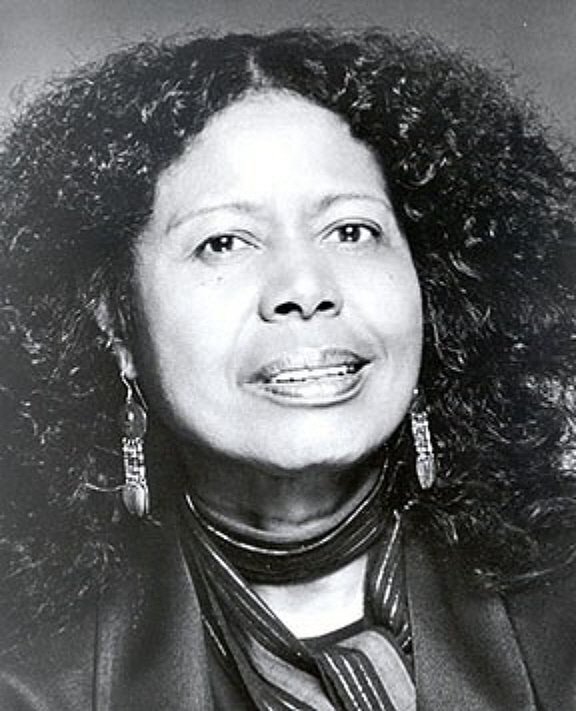
The contemporary American poetry scene recognizes Jayne Cortez (1934-2012) as an influential and remarkable poetic voice. As a leading voice of the Black Arts Movement, Cortez established a poetic style that combined musical elements with strong political awareness and direct challenges to social inequities. Cortez’s poetry stems from her life as an African American woman who grew up in Arizona and Los Angeles while immersing herself in jazz and blues music and supporting worldwide liberation efforts. Her poetry collections, including ‘Pissstained Stairs and the Monkey Man’s Wares’ (1969), ‘Festivals and Funerals’ (1971), and ‘Coagulations: The collection ‘New and Selected Poems’ (1984) displays a combination of sharp intellect with exceptional rhythmic talent. The article examines the multiple dimensions of Cortez’s poetry through its thematic exploration, literary influence, distinctive imagery and symbolism creation, political involvement, musical innovations, and examinations of gender and identity. By examining Cortez’s work we gain insight into her innovative poetic style which maintains its influence on modern literary and political discussions.
Jayne Cortez’s poetic work features recurring themes and motifs which showcase her political awareness and cultural awareness. Her work consistently demonstrates an absolute dedication to achieving freedom across political, cultural, and personal dimensions. Persistent motifs of resistance against oppression appear throughout her work as she addresses racism, colonialism, sexism, and economic exploitation. Cortez addresses systemic violence head-on in her poems ‘There It Is’ and ‘I Am New York City.’ The physical form operates as a significant motif in her work which represents both a target of subjugation and a means to achieve freedom. Her poem ‘If the Drum Is a Woman’ examines women’s bodies as battlegrounds for domination yet emphasizes their ownership of their own power. The theme of African diasporic identity stands out in her work because Cortez often calls for pan-African unity while linking the struggles found in Africa with those in the Caribbean and the United States. Historical resistance icons like Patrice Lumumba and Malcolm X populate her poetry which establishes a continuous narrative of revolutionary struggles. Many poems by Cortez use New York City landscapes as their backdrop because the city represents both capitalist exploitation and cultural innovation during her extensive adult residency there. Cortez infuses her work with transformation and metamorphosis motifs to demonstrate how radical change holds revolutionary potential. Her poems offer more than social critique as they project new possibilities and express hope through their insistence on the potential for radical change. The combination of interlinked themes and motifs establishes a unified vision that places her work at the crossroads of artistic innovation and political commitment.
The African American literary canon bears the permanent imprint of Jayne Cortez’s unique poetic voice which emerged from her active involvement in the Black Arts Movement and her enduring influence on later poets. The 1960s and 1970s Black Arts poetry movement was shaped by Jayne Cortez alongside peers such as Amiri Baraka, Sonia Sanchez, and Nikki Giovanni through her work on aesthetic and political aspects. Her artistic production demonstrates the Black Arts Movement’s demand for art which addresses Black experiences while promoting revolutionary thinking. Cortez’s importance goes beyond her Black Arts Movement ties because she formed an original transnational viewpoint linking African American experiences with worldwide liberation movements. Through her innovative combination of jazz aesthetics with poetry Cortez explored new dimensions for performance-based poetics which redefined poetic expression in public settings. Her artistic partnership with musicians in ‘The Firespitters’ established an interdisciplinary practice model which still guides modern poets who work in various genres. Cortez’s penetrating analysis of violence against Black bodies anticipated modern African American literary themes that explore embodiment and vulnerability through resistance. Her bold confrontation of sexual violence along with gendered oppression opened opportunities for subsequent Black feminist poets to explore these topics. Cortez’s unique linguistic techniques including code-switching and neologisms along with repetition and syntactic experimentation transformed African American poetic language into a more expressive form. Through the combination of vernacular speech and global references she proved Black English could express intricate political and philosophical concepts. Her poetry connects historical protest movements with modern identity politics expressions while advocating for group freedom but recognizing personal individual experiences. Cortez’s own publishing work and her establishment of the Organization of Women Writers of Africa represent institutional advances which enlarged opportunities for Black women’s literary expression. Poets such as Patricia Smith, Claudia Rankine and Harryette Mullen recognize their creative debt to Cortez because of her innovative use of performance and her bold political stance. Cortez’s legacy illustrates that African American literary expression can benefit from both political commitment and aesthetic innovation working together as complementary forces.
Through powerful use of symbols and imagery Jayne Cortez creates vivid sensory experiences which strengthen her political commentary and define her unique poetic style. The human body stands as the fundamental element of her imagery through its raw and direct portrayal. Through graphic corporeal imagery in poems like ‘Rape,’ Cortez depicts violence without making suffering appear aesthetically pleasing. Her bodily imagery demands an acknowledgement of physical fragility even as it reinforces the body’s ability to fight back. Natural imagery in Cortez’s work often serves symbolic functions: The symbolism of rivers in Cortez’s work refers to historical continuity with an emphasis on African diasporic heritage. She uses natural symbols in ‘Find Your Own Voice’ to advocate for genuine self-expression along with political empowerment. Cortez portrays cityscapes within her urban imagery as battlefields experiencing economic exploitation alongside cultural innovation and political conflict. The city of New York stands as both a tangible entity and a representation of the paradoxes inherent in American capitalism. The poem ‘I Am New York City’ portrays the metropolis as both predatory and dynamic because it devours its citizens yet produces cultural innovations. Blood serves as a complex symbol in Cortez’s writing by illustrating both oppressive violence against marginalized communities and the essential energy powering movements of resistance. Through ‘Blood Sucking Poems’ she turns blood into a metaphor illustrating exploitative economic and social relationships. Drums and saxophones serve as powerful symbols that link African diasporic cultural traditions to modern resistance movements. The drum stands as a key emblem embodying community recollections and rhythmic unity while showcasing the enduring presence of African cultural practices against historical erasure efforts. Throughout her work, weapons and tools serve as dual-purpose symbols that take on meanings of oppression or liberation based on their wielder. Cortez’s symbolic method stands out because she avoids fixed meanings and instead builds her symbols’ meanings through repeated use and transformation within different contexts. Her artwork utilizes shocking pairings that generate mental conflict which compels readers to question established connections. This method demonstrates her jazz-inspired technique that turns known motifs into spontaneous variations. Cortez builds a poetic universe through complex symbolic systems that deliver both political clarity and symbolic depth to engage readers at several levels.
Jayne Cortez’s poetry demonstrates how artistic expression functions as a tool for political intervention. Her work presents an unrelenting analysis of interconnected oppressive structures that span capitalism, imperialism, racism, and patriarchy. Cortez uses direct references to instances of injustice in her poetry while employing documentary elements to establish historical context instead of relying on abstraction or allegory like some poets. ‘U.S./Nigerian Relations’ delivers a straightforward critique of American economic dominance in Africa while ‘Rape’ discusses sexual violence without using metaphorical language. Her work’s direct naming of specific events creates a powerful and immediate political commentary. Cortez’s political perspective bridges the gap between U.S.-based struggles and international liberation movements through a consistently transnational viewpoint. Through poems such as ‘For the Brave Young Students in Soweto’ and ‘Somewhere in Advance of Nowhere’ she establishes global solidarity which connects diverse resistance movements into one collective fight against oppression. Her analytical work continually identifies economic exploitation as the foundational source behind all forms of oppression. The poems ‘Economic Love Song’ and ‘Capital Punishment’ examine how capitalism strips humanity from communities of color. Cortez merges cultural expression with material conditions to show how different forms of oppression become interconnected within capitalist systems. Her commentary regularly examines state violence which appears through police brutality and military actions as well as incarceration practices. The poems ‘Prisoner’s Song’ and ‘Police Stories’ examine how Black Americans face systematic criminalization and predict modern criticisms of mass incarceration practices along with police brutality. Cortez’s political poetry transcends mere documentation of oppression by portraying potential avenues for change. Poetry pieces such as ‘Find Your Own Voice’ and ‘I’m A Revolutionary Woman’ demonstrate resistance potential through themes of collective action and cultural autonomy to achieve freedom. Her analysis of language forms the foundation of her political commentary. The poems ‘Evangelistic Pork’ and ‘Postscripts to a Genocide’ show that political and media discourse hides reality and makes violence seem normal which requires linguistic resistance as an essential part of political battles. Cortez sets her political poetry apart by maintaining aesthetic complexity despite her political messages being direct. She shows that formal experimentation strengthens political messaging through rhythmic innovation along with unexpected metaphors and linguistic play. She presents revolutionary poetics that proves political engagement and artistic sophistication are not mutually exclusive by showing how both consciousness and form can be transformed. Her blend of political dedication and artistic innovation creates compelling commentary which proves poetry’s dual capacity as cultural expression and political intervention.
Jazz acts as the core principle that structures Jayne Cortez’s poetic methods which guide her rhythmic patterns and improvisational techniques while shaping her collaborative practices and cultural politics. Cortez created a poetic style that turns jazz principles into literary expression through her former marriage to Ornette Coleman and a lifetime of musical exploration. Her work displays jazz through the most evident feature of rhythmic complexity. Cortez uses polyrhythms and syncopation along with changing tempos to reflect jazz music’s rhythmic creativity. The structure of Cortez’s poems starts with an initial rhythm which she disrupts through variations to generate tension between established patterns and deviations. The typographical arrangement of ‘Jazz Fan Looks Back’ and ‘Ornette’ manifests these rhythmic shifts by visually structuring text on the page. Repetition functions in Cortez’s poetry much as riffs do in jazz: Through repeated presentations with slight modifications, phrases build upon their meaning with each iteration. ‘There It Is’ utilizes its title phrase repetitively to function as a rhythmic foundation supporting the improvisation of other language elements. The method produces auditory enjoyment while enhancing meaning depth. Cortez’s poetry performance style exhibits direct parallels with jazz musicianship methods. Her work with ‘The Firespitters’ illustrates her perspective of poetry as an inherently collaborative and spoken art form. The techniques she uses in her vocal delivery demonstrate direct inspiration from free jazz saxophone methods through her focus on timbre, dynamics, and phrasing. Her poetic syntax displays jazz improvisation characteristics by employing associative leaps together with unexpected juxtapositions and deliberate disruptions of conventional grammar. Cortez’s poetry establishes surprising links among different elements in the same way jazz improvisers abruptly shift direction or bring other musical pieces into their performance. The conceptual framework of jazz allows Cortez to explore Black cultural experience. The poems she writes about jazz musicians (‘If the Drum Is a Woman,’ ‘Ornette,’ ‘For Jayne Cortez and the Firespitters’) establish these artists as both musical pioneers and cultural theorists whose work stands as an act of resistance. In Cortez’s poetry jazz serves as both an artistic method and a political declaration illustrating the transformative power of Black cultural expression in forging new existences that defy mainstream systems. Cortez’s jazz-inspired poetry challenges the false divisions that separate elite and popular culture and breaks down barriers between written text and spoken word as well as between structured composition and spontaneous performance. Her work shows how traditionally conflicting elements can exist together in a dynamic balance to form a hybrid style that respects Black musical traditions while pushing poetic boundaries. Cortez developed a unique voice through her jazz-based methodology which remains influential among modern poets who combine musical elements with literary expression.
The investigation of gender and identity by Jayne Cortez stands as one of her key achievements in American poetry. Her work examines Black women’s personal experiences and links them to wider systems of power and resistance. Cortez’s feminist poetics stands out because she combines gender analysis with critiques of racism, imperialism, and capitalism to create an intersectional framework that preceded later Black feminist theories. Through ‘If the Drum Is a Woman,’ Cortez confronts how women’s bodies become objects while making connections between female exploitation and African cultural appropriation. Through its central metaphor the poem illustrates the link between violence against women and colonial violence which reveals the pervasive nature of patriarchal domination across various domains. Her work persistently analyzes sexual violence through the lens of systemic power dynamics instead of treating it as standalone events. The poems ‘Rape’ and ‘Lynch Fragment’ address gendered violence by presenting it as an ongoing structural issue linked to historical racial violence patterns instead of sensationalizing these acts. Cortez’s gender analysis stands out because she avoids reducing women to mere victims. ‘I Am New York City’ and ‘Revolutionary Woman’ feature female characters who demonstrate personal agency in the face of widespread systemic barriers. These characters demonstrate a sophisticated representation of Black womanhood that encompasses both vulnerability and assertive strength alongside creative independence and self-direction. The way Cortez discusses sexuality adds another vital layer to her exploration of gender politics. While many poets choose to either exclude explicit sexual content or mask it with euphemisms, Cortez confronts female sexuality head-on and defends erotic pleasure as an acceptable poetic theme. This approach disputes deep-rooted prohibitions against Black women expressing their sexuality and establishes sexual self-governance as essential to full liberation. Her study of identity covers gender issues while also investigating the intricate aspects of racial and cultural identity. The poems ‘Diaspora’ and ‘Sacred Trees’ explore the development of African American identity through historical displacement and cultural memory while maintaining connections to Africa. The texts reveal identity as a fluid and relational construct that evolves through cultural activities and political conflicts instead of being static or fundamental. Cortez’s formal choices demonstrate her perspective on gender and identity. She employs vernacular speech and multilingual elements while emphasizing oral performance to honor expression types previously dismissed because of their links to oppressed communities. She confronts established hierarchies by raising the status of oral traditions against written forms and vernacular speech against standard English while opposing male-dominated literary traditions with women’s cultural production. Cortez created a feminist poetic approach that integrates gender with multiple identity aspects and connects personal experience with structural examination through her diverse exploratory work. Through her poetry, she shows that it is possible to express intricate identity concepts while dedicating her work to collective freedom.
The revolutionary fusion of aesthetic innovation with political dedication present in Jayne Cortez’s poetry maintains its impact within both modern literary circles and political discussions. Her poetry achieves a productive dissolution of the line between art and activism by serving as both cultural expression and political intervention. Cortez developed a body of work that redefined poetry’s potential through her combination of jazz rhythms, direct confrontation of injustice, vivid imagery, global political awareness, and deep exploration of identity. Her dedication to exploring how racism, sexism, imperialism, and economic exploitation interconnect anticipated intersectionality methods now vital to literary and political analysis. Cortez left behind a remarkable legacy through her published works together with her performance activities, her musical collaborations, her leadership in the Organization of Women Writers of Africa, and her impact on later generations of poets. Modern readers discover in Cortez’s writing an uncompromising poetic voice that proves formal complexity adds to political effectiveness. During a time where literary discussions remain focused on art-politics connections Cortez’s poetry shows how verse can both disrupt language norms and address societal wrongs. Her work demonstrates that language holds transformative power which transcends simple reflection of reality by enabling its reimagining and eventual transformation.
2 responses to “Analyzing the Poems of Jayne Cortez: Black Arts Movement”
Awesome https://is.gd/tpjNyL
Awesome https://is.gd/N1ikS2