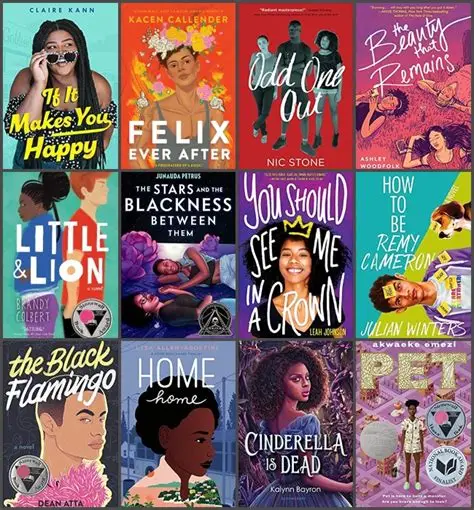
Writing a great Black LGBTQ+ book is one of the most important and also one of the most difficult tasks a literary artist can face today. Novelists who work at the intersections of race, queerness and gender nonconformity include James Baldwin, Audre Lorde, Octavia Butler, Adrienne Rich, Danez Smith, Radclyffe Hall, James Penner, Jewelle Gomez, Samuel Delany, E. Lynn Harris, Alice Walker, Shay Youngblood, Trey Ellis, Jacqueline Woodson, Alexis DeVeaux, Danzy Senna, Zayde Smith, Imo Nse Imeh, Thomas Glave, Michelle Cliff, Brontez Purnell, Teju Cole, and many others. Some of the most recent contributors to this literary tradition are Ocean Vuong, Akwaeke Emezi, Samuel Delany, Brandon Taylor, and Raven Leilani. It takes skill and talent to write a good book, but it also takes bravery, commitment, and a certain level of generosity. The best Black LGBTQ+ books teach us about the world and about humanity. They help some readers to see and they help others to be seen. This kind of writing is often about putting words on the page in a way that makes room for complicated, intersecting identities, and validates the experiences of people who have been told that their identities are not acceptable, or even not real. When a Black LGBTQ+ writer writes a great book, they often succeed in both expanding our world and making that world a better place.
The complexities of intersectional identities create both a challenge and a chance for literary triumph for Black LGBTQ+ authors. Writing characters that accurately and respectfully represent diverse and layered identities is an ongoing hurdle. The writer must steer clear of tropes and stereotypes without negating the authentic representation of these identities. In this sense, there is a challenge of providing a nuanced portrayal that also provides a mirror for readers with similar identities and a window for those unfamiliar. The struggle to avoid “the danger of a single story” as famously stated by Chimamanda Ngozi Adichie is magnified when the characters represent multiple marginalized identities, particularly those often underrepresented in publishing. Another challenge is that the author is burdened with explaining the unexplained. For instance, a Black LGBTQ+ writer might feel pressured to elucidate certain cultural aspects to an assumed white, heterosexual audience, which could otherwise organically weave into the narrative. In the words of poet and novelist Saeed Jones, this can be a literary double duty of being a storyteller and a cultural translator. This also applies to the expectation to center trauma. There is often an external pressure for Black LGBTQ+ narratives to be about pain rather than joy, which confines the breadth of experiences that the writing can explore. On the flip side, these challenges have given rise to beautiful literary innovations, with Black LGBTQ+ authors creating unique narrative styles and perspectives that defy traditional storytelling norms. The nuanced exploration of layered identities has been a means of redefining the very fabric of literature itself. For example, a triumph in this space is when a writer like Danez Smith or Rivers Solomon crafts a narrative that is so inherently resistant to simplification that it expands the reader’s understanding of identity, joy, and pain. It’s not just adding to the body of literature; it’s changing the literary landscape, pushing boundaries, and making way for more stories to be told and experienced.
Visibility and diversity are essential in black LGBTQ+ literature, as they work against the erasure and homogenization of marginalized identities in mainstream media and publishing. By providing representation and diverse perspectives, black LGBTQ+ novels create mirrors for readers who often feel unseen and validated in their experiences. These windows into the lives and experiences of black LGBTQ+ individuals foster understanding and empathy among readers who may not share the same identities, expanding their perspectives and challenging preconceived notions.
An additional point to note is that complexity, nuance, and specificity in characterizations are also very important. It’s very easy, when writing characters that belong to marginalized groups, to either sanctify them or make them into cautionary tales. A good Black LGBTQ+ novel features complex characters that their identities do not have to serve a single plot function, characters who are complex, inconsistent, dynamic and can be good at some things and struggle at others, just like real people. This is one of the things I particularly like about Jesmyn Ward’s characters: they are not alone, they live in communities that have ties and relationships that serve to ground and uplift them, but also complicate their lives. Characters should be relatable not necessarily because they’re doing or experiencing things that all readers can relate to, but because they have feelings and reactions that most readers can empathize with, and also because the things they do and experience are specific enough to be recognizable and realistic. We’ve all experienced heartbreak and the jealousy, anger, and despair that accompany it, but a character like Wallace in Real Life will have a different experience than most readers (me included) not only because he’s young and in college, but because he’s Black and gay, in a college full of white people and closeted or confused gay men. Not everyone will be able to relate to his particular circumstances, but by creating a character who has depth and specificity and is given an interior life, Brandon Taylor is able to create a character that’s specific and relatable at the same time. Last but not least, the writers of the best Black LGBTQ+ stories are those that resist the urge to reduce their characters to a single quality or turn them into either saints or monsters. Good character development is as much about allowing characters to make mistakes, and perhaps learn from them, but not having to redeem themselves by the end. The readers will remember your characters as long as they leave an impression on them, as long as they’re complex, inconsistent and contradictory, have an interior life, and are allowed to be human. Think about Celie from The Color Purple or the unnamed protagonist of Giovanni’s Room.
My other criteria for a good Black LGBTQ+ novel are not unrelated to the first: intersectionality. By this, I mean that I expect novels to give me a textured exploration of the ways in which race and sexuality intersect with, complicate, and complicate one another. I’m not interested in a book that prioritizes one of these identities while the other remains an afterthought or add-on. I’m also not looking for a book that reduces the experience of being Black and queer to a single note. For instance, one of the characters in Keisha Ervin’s book doesn’t get to be Black without also being queer, and they don’t get to be queer without also being Black. These identities do not cancel each other out, but they also don’t simply co-exist. They mutually constitute one another, which is to say they co-create lived experience. Intersectionality creates another interesting dynamic that a good Black LGBTQ+ novel can utilize, namely, that one might find a sense of belonging or acceptance in one community or space and otherness or exclusion in another. For example, a person could feel welcomed and affirmed in a predominantly white LGBTQ+ space, but endure racism. Conversely, someone could experience affirmation in Black community or space and, in that same space, homophobia or transphobia. There is a kind of narrative tension inherent in those juxtapositions. A great example of a Black queer text that powerfully explores this sort of tension is Danez Smith’s poetry collection Don’t Call Us Dead, which writes against the precarity of Black queer existence in the United States. The best novels also, then, allow for a textured exploration of the ways in which intersectional identity shapes a character’s or characters’ relationships to power, privilege, and resistance. This includes an analysis of how one might develop unique modes of surviving and of community formation in response to the realities of multiple forms of marginalization. As I mentioned, writers like Roxane Gay are excellent at rendering their characters’ navigation of different aspects of their identities across different contexts and settings. This might include code-switching between speech communities, but also presentation and performance of the self in environments that demand different comportment and posturing because of their differing expectations, values, and potential dangers. The best books don’t approach such navigation as a burden or a source of tension but as something that cultivates unique insight and informs characters’ relationships to the world around them and to themselves in productive and creative ways.
Black LGBTQ+ literature has always engaged with social and political issues. From Baldwin’s commentary on US race relations to Edwidge Danticat’s response to the Haitian political climate, Black LGBTQ+ novels have commented on and resisted the sociopolitical status quo for a long time. More recent novels have engaged with police violence, unequal access to healthcare, lack of government support for trans lives, and the politics of religious institutions, among other things. What makes an effective political engagement is a question that Black LGBTQ+ authors have been interrogating and have provided plenty of insight for their peers, readers, and newcomers. Authors from this tradition are aware of the fact that the personal is political for those subjects who have been othered in the United States: family acceptance, displays of affection in public, and access to healthcare, among other experiences, are not immune to the touch of the political for us. For instance, novels like Freshwater by Akwaeke Emezi and An Unkindness of Ghosts by Rivers Solomon tackle colonization, the gender binary, and class systems through the personal experience of their characters, rather than presenting an essayistic or journalistic piece on the topics. These works walk the line of character-driven narratives while putting the characters into conversation with these questions. When the focus is on the emotional rather than the intellectual, these questions seem closer to home, closer to life, and invite an engagement that is not accessible when the politics of a work is overly didactic. Another way to make political questions and the social critique engaging for readers is to avoid framing the questions in binary ways. Even Black LGBTQ+ communities are not immune to colorism and class privilege, for example, and the best political engagements are willing to tackle these questions, rather than casting themselves and their readers as wholly good and the other communities as the political status quo. In a similar way, the most effective political engagements in Black LGBTQ+ literature are not overly concerned with the people in power as these groups of people are often too abstract to be changed. Racism, homophobia, transphobia, and other systems of exclusion often function at an institutional level, an unconscious level, and through cultural narratives and tropes. When political engagement in a text doesn’t have an individual to blame or overcome, but rather an institution and a way of life to connect to a character’s specific experiences, then that work walks the line of political writing that is part of the storytelling and not in addition to it.
Black LGBTQ+ literature has also made a significant impact on the literary canon by redefining what is considered “mainstream” and “universal” in literature. By centering the experiences and voices of Black LGBTQ+ individuals, these works have expanded the range of narratives and styles that are recognized and celebrated within the literary world. From the pioneering works of authors such as Audre Lorde and James Baldwin to contemporary writers like Akwaeke Emezi and Brandon Taylor, Black LGBTQ+ literature has challenged the narrow definitions of what is considered “literary” and “worthy” of attention, opening up new possibilities for experimentation and representation. In doing so, these works have also disrupted the artificial boundaries between “identity writing” and “universal literature,” showing that the particular can also be the profound. As these works have gained visibility and critical acclaim, with authors like Ocean Vuong, Saeed Jones, and Gabby Rivera receiving major literary awards and their works being studied in classrooms across the country, they have helped to shift the literary landscape and redefine what is considered canonical. In addition to its influence on the literary canon, Black LGBTQ+ literature has also had a broader cultural impact on society by raising awareness about the experiences and struggles of Black LGBTQ+ individuals. These works have helped to bring visibility to a group that has often been marginalized and underrepresented in mainstream culture, and by doing so, have helped to challenge stereotypes and promote understanding. Black LGBTQ+ literature has also played an important role in social and political movements, such as the fight for LGBTQ+ rights, racial justice, and gender equality, by humanizing the issues and providing a platform for marginalized voices. By offering a nuanced and complex portrayal of the experiences of Black LGBTQ+ individuals, these works have contributed to a more empathetic and informed public discourse around these issues. In addition to their cultural and political significance, Black LGBTQ+ literature has also had an impact on the publishing industry and book markets by opening up new audiences and expanding the range of stories and styles that are recognized and celebrated. The success of these works has also demonstrated that there is a demand for diverse and inclusive literature, and has encouraged publishers to take risks and invest in more marginalized voices.
In summary, for me, success in black LGBTQ+ writing is about creating art that is both specific and universal, political and beautiful. Stories that do the work we need in our literary ecosystem: making visible the many kinds of people and lives that have been denied space; complicating and expanding limited or essentializing views of what it means to be human; and showing us more of the ways we might live and be in the world. Success is not about meeting expectations, it’s about bringing your truth and your artistry to the stories that need to be told. The future of this work is bright, and it will continue to transform not just who we read, but how we read.
66 responses to “Crafting a Successful Black LGBTQ+ Novel: Essential Elements and Strategies”
Promote our brand and watch your income grow—join today! https://shorturl.fm/KwGwq
Apply now and receive dedicated support for affiliates! https://shorturl.fm/aewhA
Your network, your earnings—apply to our affiliate program now! https://shorturl.fm/622wQ
Get paid for every referral—enroll in our affiliate program! https://shorturl.fm/euS4D
Join our affiliate program and start earning commissions today—sign up now! https://shorturl.fm/m0WZ8
Start sharing, start earning—become our affiliate today! https://shorturl.fm/ghbuH
Apply now and unlock exclusive affiliate rewards! https://shorturl.fm/ewU4E
Drive sales, earn commissions—apply now! https://shorturl.fm/h2E5B
Be rewarded for every click—join our affiliate program today! https://shorturl.fm/JhFz7
Share your link and rake in rewards—join our affiliate team! https://shorturl.fm/XkHcE
Start earning on autopilot—become our affiliate partner! https://shorturl.fm/amZLd
Partner with us and earn recurring commissions—join the affiliate program! https://shorturl.fm/7ttD4
Share your link, earn rewards—sign up for our affiliate program! https://shorturl.fm/CDpaH
Sign up for our affiliate program and watch your earnings grow! https://shorturl.fm/HZ5Ms
Join our affiliate program today and start earning up to 30% commission—sign up now! https://shorturl.fm/08HQF
Refer friends, earn cash—sign up now! https://shorturl.fm/cP3AM
Turn traffic into cash—apply to our affiliate program today! https://shorturl.fm/MIbNa
Unlock exclusive affiliate perks—register now! https://shorturl.fm/jt0p5
https://shorturl.fm/QyxRf
https://shorturl.fm/BuTG9
https://shorturl.fm/KMhKa
https://shorturl.fm/xlSIq
https://shorturl.fm/W70kL
https://shorturl.fm/7Bhaj
https://shorturl.fm/lUuRU
https://shorturl.fm/ycMqz
https://shorturl.fm/349a7
https://shorturl.fm/yMqy2
https://shorturl.fm/qMyW8
https://shorturl.fm/rWsEj
https://shorturl.fm/EJ04T
https://shorturl.fm/FHUXb
https://shorturl.fm/cHB2x
https://shorturl.fm/E4YXn
https://shorturl.fm/37Cgg
https://shorturl.fm/AyXha
https://shorturl.fm/cmre0
https://shorturl.fm/cmre0
https://shorturl.fm/g9gKa
https://shorturl.fm/WQg12
https://shorturl.fm/Utnsu
https://shorturl.fm/PNRT3
https://shorturl.fm/eL1B4
https://shorturl.fm/bFlqj
https://shorturl.fm/TBImU
https://shorturl.fm/rCLuL
https://shorturl.fm/uEYht
https://shorturl.fm/9EwBj
https://shorturl.fm/1Icpy
https://shorturl.fm/ilG85
https://shorturl.fm/89uK8
https://shorturl.fm/8ok2o
https://shorturl.fm/DCIHC
https://shorturl.fm/YNktX
https://shorturl.fm/cUKMK
https://shorturl.fm/kt23w
https://shorturl.fm/6hNwL
https://shorturl.fm/3LIOB
https://shorturl.fm/LbT7z
https://shorturl.fm/hnlkS
https://shorturl.fm/DnTdu
https://shorturl.fm/WY7LG
https://shorturl.fm/zdPfv
https://shorturl.fm/cFup4
https://shorturl.fm/2GgMW
https://shorturl.fm/yiHJN