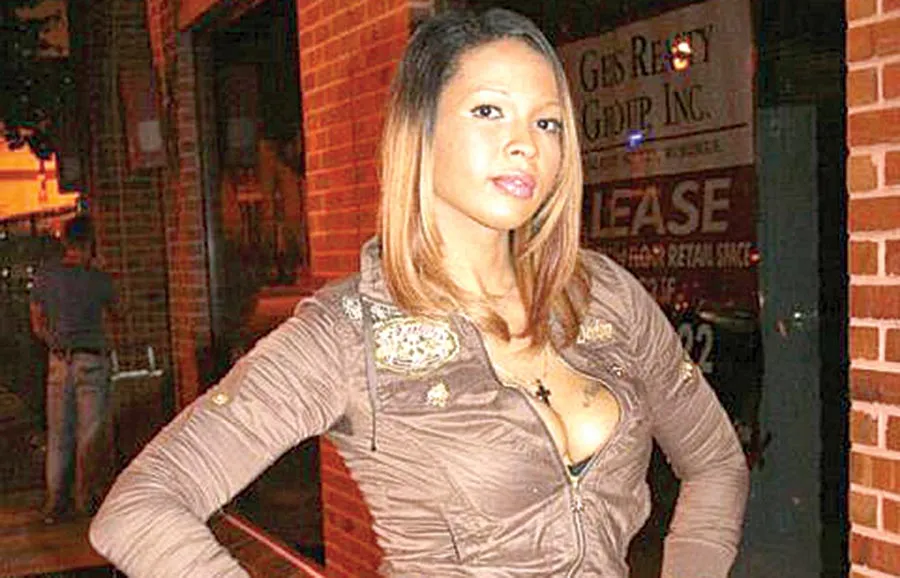
Stacey Blahnik Lee
In 2010, the murder of Stacey Blahnik Lee shocked Philadelphia’s transgender community and community at large. Stacey, a 31-year-old Black transgender woman, was well-known in the ballroom scene and was also an HIV prevention counselor. Her body was found in her South Philadelphia apartment by her boyfriend, Malik Moore. Stacey Blahnik Lee was brutally murdered through strangulation, and to this day, her case is unsolved. Her murder is one of many that have taken the lives of countless Black transgender women in the United States. This ongoing epidemic lies at the intersection of racism, transphobia, and misogyny, forming a perfect storm that exposes Black transgender women to a unique set of vulnerabilities that make them more susceptible to victimization. In this blog, we will examine Stacey Blahnik’s murder and the broader context of violence against Black transgender women, including the systemic factors that contribute to this crisis and the actions necessary to build a safer and more equitable society for transgender people.
Stacey Blahnik Lee’s murder is a horrific reminder of the very real and pervasive ways transphobia in our society endangers the lives of Black transgender women. As is the case for far too many transgender people, Stacey was killed at home, in the place she should have been safest. In the 15 years since Stacey’s murder, violence against transgender people, and especially Black transgender women, has remained prevalent and routine. The Human Rights Campaign reported that in 2020 alone, at least 44 transgender or gender non-conforming people were shot or killed by other means, the deadliest year on record since the organization started tracking this data. Most victims have been Black and Latinx transgender women. Transphobia can lead to physical assault, sexual violence, domestic abuse, and murder. Black transgender women are at an increased risk of violence because of how misogyny and white supremacy work together to devalue and endanger their lives. By speaking about transgender people in dehumanizing ways in public discourse and the media, and debating policies that impact the lives of transgender people in society, politicians and public figures create an environment that perpetuates violence against transgender people. Anti-transgender hate speech by people in positions of power contributes to a climate of violence in which the lives of transgender people are threatened. Homelessness, economic insecurity, and being cast out by family or protective systems also increases one’s vulnerability to violence. Homelessness or near-homelessness, and the unsafe living conditions or underground economies that often result, are common among transgender women of color, and especially Black transgender women. While Stacey Blahnik was able to maintain safe housing and steady work, not all Black transgender women are so fortunate. A lack of housing and job security, combined with family rejection and other systems of social safety, means that violence is tolerated and Black transgender women’s lives are at risk.
Kimberlé Crenshaw coined the term intersectionality to help us understand the experiences of people like Stacey Blahnik. Black transgender women face discrimination based on their race, gender identity, and gender expression. These identities intersect and cannot be separated from one another. In the United States, Black people experience racism in mainstream society and the LGBTQ+ community, Black people experience transphobia in mainstream society and the Black community, and women experience misogyny in all communities. As a result of these intersecting identities, Black transgender women face unique challenges and discrimination. For example, they are four times more likely to live in poverty, twice as likely to be unemployed, and twice as likely to experience harassment and discrimination in healthcare, housing, and public accommodations. At the time of her death, Stacey Blahnik was a Black transgender woman living in Philadelphia. Her intersecting identities likely influenced both the circumstances of her murder and the police response. The ballroom community that Stacey Blahnik was a part of is a direct result of the intersectional marginalization of Black LGBTQ+ individuals. Ballroom houses provide a sense of family and support to their members, who are often rejected by their biological families and mainstream society. Ballroom houses, like Stacey Blahnik’s House of Blahnik, also provide mentorship and support to members as they navigate life as Black transgender women. Stacey Blahnik served as the ‘mother’ of the House of Blahnik. Members of ballroom houses take the names of their houses and have special relationships with their mothers. Intersectionality is a useful framework to help us understand why crimes against Black transgender women like Stacey Blahnik often go unreported and unsolved. Black transgender women are marginalized in both the mainstream and LGBTQ+ communities, which can lead to less media coverage, fewer resources for investigation, and lower clearance rates than for crimes against white or cisgender victims. For example, Stacey Blahnik’s murder remains unsolved over 15 years later.
Violence against transgender individuals is a major social justice issue, and victims like Stacey Blahnik often face significant obstacles in seeking justice. Challenges to justice include misgendering by police and the media, lack of investigation resources, and law enforcement officials’ lack of cultural competency around transgender issues. For Stacey, and to this day her murder remains unsolved more than ten years later, this is a far too common reality for many cases involving transgender victims, especially Black transgender women. Support and advocacy have come from several organizations that aim to bridge gaps in the justice system for transgender victims and work toward broader systemic change. The Transgender Law Center, the National Center for Transgender Equality, as well as local groups like the Mazzoni Center and GALAEI in Philadelphia, have been active in advocating for crimes against transgender individuals to be properly investigated and in working to change policies that marginalize and endanger transgender people. These organizations focus on a variety of issues including data collection on anti-transgender hate crimes, training for law enforcement on transgender issues, and policy reforms to reduce discrimination. Memorial and remembrance projects, such as community-led initiatives like the annual Transgender Day of Remembrance, which was created in 1999 to honor the life of Rita Hester, another transgender woman of color who was murdered, also play a vital role in the process of grieving and honoring those lost. In Philadelphia, local activists have commemorated Stacey Blahnik’s life and called for justice through community events, demonstrations, and sustained advocacy. These acts of remembrance and memorialization not only honor the lives of those lost but also serve as a call to action to protect and support the transgender community. Advocacy also extends to addressing the systemic issues that put transgender people at risk of violence, such as economic insecurity, lack of housing, healthcare disparities, and legal discrimination. In recent years, there has been a push for a more holistic approach to justice that not only seeks to hold perpetrators accountable but also addresses the root causes of violence and inequality. This includes efforts to ensure economic justice, housing stability, healthcare access, and legal protections for transgender people, particularly Black transgender women.
Coverage of Stacey Blahnik’s murder is emblematic of both improvements in and ongoing issues with media reporting on violence against trans people. Some news reports about her death in 2010 misgendered her or used her deadname, then common but now widely considered a form of violence against the deceased. The standards around using appropriate names and pronouns for transgender victims have improved in the intervening years, though this standard is not always applied in practice. Violence against Black trans women like Stacey is often both underreported and sensationalized when reported, in part because their lives are not as highly valued by society. When the news does report on a transgender victim, it is more likely to focus on the horrific details of their death rather than on the victim’s life or systemic factors leading to their vulnerability. Even when cases such as Stacey’s are covered, they are more likely to be in LGBTQ+ publications and not receive the same level of attention from mainstream news outlets, leaving the larger public less aware of the full scope of the epidemic of violence. Social media provides a venue to raise awareness and connect when traditional media coverage is lacking or absent. Hashtags such as #SayHerName (created to draw attention to Black cis women killed by the police but now being applied to trans victims as well) and #BlackTransLivesMatter have served as a way to share information about victims and the circumstances of their deaths, mobilize community response, and push for action and accountability. This social media activism has been essential in bringing attention to some of the cases which might otherwise go unnoticed by the general public. The indirect effects of positive media representation of trans people are another critical but less visible front in the fight against violence. Documentaries such as The Death and Life of Marsha P. Johnson or television shows with trans characters played by trans actors can serve to humanize trans people and show the full complexity of their humanity, challenging the dehumanizing narratives that make violence against them possible. This must be balanced against a continuing deluge of negative stereotypes and tropes in media that do the opposite.
In addition to holding individuals accountable, it is crucial to recognize that Stacey Blahnik’s murder, like many others, took place against a backdrop of institutional and societal discrimination that continues to put Black transgender women at risk. To address this systemic discrimination, a range of systems require interventions. The criminal justice system that often failed Stacey in life, and that has failed many others, must be reformed to better serve victims through increased training for police officers, prosecutors, and judges on transgender issues; the implementation of clear protocols for investigating crimes against transgender people; and accountability measures when these protocols are not followed. Legal protections at the federal and state level are also essential in addressing anti-transgender violence. Although there have been important legal advancements since Stacey’s murder, including a 2020 U.S. Supreme Court decision (Bostock v. Clayton County) that extended employment discrimination protections to LGBTQ+ people, many states still lack non-discrimination laws that explicitly protect transgender people from discrimination in housing, public accommodations, and healthcare, among other areas. In fact, in certain states, legislators have been introducing and enacting laws that target transgender people, particularly transgender youth. Systems of health care must also be reformed to address the institutional discrimination that transgender people, particularly Black and poor transgender women, often face in accessing health care, mental health services, and HIV prevention and treatment. Stacey, as an HIV prevention counselor, was well aware of the need for accessible and affirming health care for transgender women and, as a Black transgender woman herself, understood the barriers too many people in her community faced in accessing care. Culturally competent health care, including mental health and HIV prevention and treatment services, for transgender people is necessary. Measures to address health care disparities for transgender people include the implementation of cultural competency trainings for health care providers, the removal of insurance company exclusions on transition-related care, and targeted outreach and engagement with transgender communities. Systems of education can also play a critical role in both propagating and combating transphobia and anti-transgender violence. By implementing inclusive curricula that recognize and value transgender history and contributions, adopting anti-bullying policies that explicitly include protections against anti-transgender harassment, and creating supportive and affirming environments for transgender students, schools can help shape more positive societal attitudes towards transgender people. Religious institutions, which have often been sources of anti-transgender stigma and violence, can also serve as sites of intervention. Faith communities that welcome and affirm transgender people and speak out against transphobia can play an important role in shifting cultural attitudes and providing spiritual and emotional support to transgender individuals who have experienced trauma and loss.
Examining the community responses to Stacey Blahnik’s murder can provide an opportunity for reflection and growth, as well as a model for allyship in the future. Genuine allyship to transgender people, particularly trans women and Black trans women, requires actions that are centered around their needs and leadership, not just performative statements of support. For cisgender allies, this can include using their privilege to amplify transgender voices rather than speaking for them, donating resources to transgender-led organizations, and speaking out or intervening when they witness transphobia in their personal or professional circles. Solidarity with other movements, like reproductive justice, racial justice, economic justice, and LGBTQ+ rights movements, is also critical for building an intersectional response to violence against Black transgender women. These movements are not separate but are interconnected and must work together to dismantle the systems of oppression that harm all of us. This can require difficult conversations about the marginalization of transgender issues within other social justice movements, as well as concrete steps to center transgender leadership. Allyship in everyday life also matters and requires ongoing work: using correct names and pronouns, speaking up against anti-transgender jokes or comments, supporting transgender-owned businesses and services, and educating oneself about transgender issues instead of relying on transgender people to provide that education. For cisgender people who knew Stacey Blahnik, being an ally after her death meant continuing to use her correct name and pronouns when speaking of her, pushing for her case to be properly investigated and her killer to be brought to justice, and supporting the transgender community that she worked so hard to help. Institutional allyship is also key and involves policy changes and resource allocation at the organizational and community levels. Employers can provide transgender-inclusive policies and benefits, healthcare providers can ensure their staff have received proper training to work with transgender patients, educational institutions can provide a safe and supportive environment for transgender students, and religious communities can publicly affirm and support their transgender members. Institutional changes can help create environments where transgender people can thrive, not just survive. Above all, effective allyship requires listening to and following the lead of transgender advocates and community members themselves, particularly Black transgender women who have a unique and valuable understanding of what it means to navigate multiple systems of oppression. The solutions to violence against transgender people will come primarily from those most affected by that violence, with allies playing a supportive rather than directive role.
Activists, community leaders, and others across the country are sharing remembrances of Stacey Blahnik Lee, a Black transgender woman who was murdered in 2010 in Seattle. In the past, she and her partner, Kaytee Uhema Wilson, co-founded a support group for Black transgender women and children, the Transitions Support Group for the Family and Friends of Black Transgenders, and she later became a senior services advocate at GenderNexus, a transgender advocacy organization. Black transgender women are killed at horrific rates. In some years, there are more than two Black transgender women killed by violence in every month. Many of these cases go unsolved. Some people are working tirelessly to change conditions in Black transgender women’s lives, particularly the epidemic of violence that Black transgender women face, but far more people need to take action to support and follow the lead of Black transgender women in efforts to create a world free of violence for Black transgender women. Changes are needed in the criminal justice system, including to ensure that these crimes are solved, as well as the implementation of comprehensive non-discrimination protections, changes in the practices of the health and educational systems to ensure that Black transgender women feel welcomed and safe in these spaces, changes in media practices to avoid dehumanizing transgender people, and more. The best way to honor Stacey Blahnik Lee’s memory and work for a future free of violence for Black transgender women is to support and follow the leadership of Black transgender women on making these changes a reality. Ways to support Black transgender women: https://nwlaw.org/issues/hiv-aids/bjh_resources_ashwin_muhlongo_final-8.20.20.pdf Organizations Working for the Rights of Transgender People:https://www.splcenter.org/fighting-hate/extremism/resources/transgender-organizations
24 responses to “Murdered in Philadelphia: The Plight of Black Transgender Women”
https://shorturl.fm/XNk8E
https://shorturl.fm/yJtKS
https://shorturl.fm/JSBdF
https://shorturl.fm/XXIOS
https://shorturl.fm/5CKqX
https://shorturl.fm/hL9Nj
https://shorturl.fm/ivQi5
https://shorturl.fm/8Thq3
https://shorturl.fm/jhveA
https://shorturl.fm/9VHC5
https://shorturl.fm/LtFA7
https://shorturl.fm/O412E
https://shorturl.fm/dwrfP
https://shorturl.fm/AFB4H
https://shorturl.fm/NXKv1
https://shorturl.fm/vhkjP
https://shorturl.fm/zzeah
https://shorturl.fm/PJuRk
https://shorturl.fm/FoXdW
https://shorturl.fm/AvZ42
https://shorturl.fm/wqqbx
https://shorturl.fm/mGewb
https://shorturl.fm/EpeT8
https://shorturl.fm/ibnTo