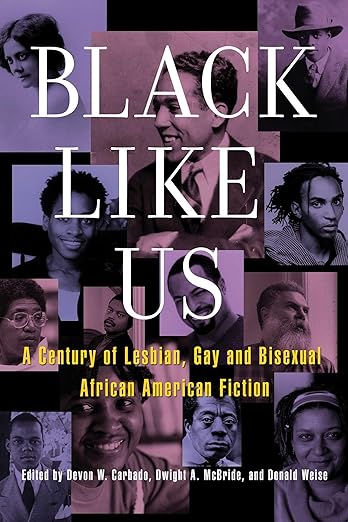
A title may be the first promise made to a reader to get them to pick up and begin a text. A title is a claim about the text that the writer is putting forward in making the selection of the title. When it comes to the black gay literature, a title is very essential. In black gay literature, a title may act as a code, a declaration, or a cultural signpost. It must work within (and sometimes against) the norms and expectations of both the publishing world and the communities for which it is intended. As such, it must be distinctive and attention-grabbing, even as it navigates the publishing industry’s often fraught history of marginalization. A good title can signal to the intended audience that this text is a safe space in which to find themselves represented. A title that challenges or subverts dominant narratives about black queer identities can help to broaden understanding and open up new possibilities. A title is therefore very important in black gay literature because it is an entry point into the text. It is a preview, a first impression, and a way to frame the literary work that follows. The title is an integral part of the text’s total experience, one that can shape and empower both writer and reader.
Titles in Black gay literature are not merely a marker of a work’s content; they are a point of both entry and often the first indexical signifier that the content within the book deals with lives at the intersection of Blackness and queerness. This is the case for classic works such as James Baldwin’s Giovanni’s Room or Another Country, which, through geographical referents, enacts the exploration of displacement so central to Black gay life, and, on the other hand, for more straightforward works such as E. Lynn Harris’s Invisible Life, which, through a double negative, alludes to the invisibility of Black gay men not only to the dominant culture but also to Black life. The allusion to Ralph Ellison’s Invisible Man, through its intertextuality, also indexes a compounding of invisibility. Black gay titles must negotiate the tension of codes meant to protect while simultaneously announcing presence. Across time, Black gay writers have had to title their work in ways that could, for those in the know, be loud and clear in its signaling, and for those who may not know, could still be a cover in a potential hostile climate. As such, these works were allowed to circulate in environments where to be ‘out’ would be risky, while at the same time become recognizable to their desired audience. Essex Hemphill’s poetry collection Ceremonies, is a case in point. Using a word that evokes the ritual and the traditional, the book, as well as the eponymous poem in it, signals through a religious connotation the ritual of coming into and celebrating Black gay life. Black gay titles have often refigured received narratives and rearticulated linguistic tools for Black gay pride. Marlon Riggs’s Tongues Untied took a biblical expression and reframed Black gay men finding voice and a new family through reclaiming the term. Joseph Beam’s In the Life was already using the expression in Black vernacular to refer to gay identity, and Beam’s decision to use it as a title was an act of linguistic reclamation that centered the title as a proud expression. In each of these ways, the titles in Black gay literature have had to announce themselves in a broader cultural dialogue where Black gay life has been otherwise.
Titles in Black gay literature are not merely introductory phrases but portals that provide context, theme, and tone of the literary works. They often reflect the socio-political milieu of the time and can signal shifts in the cultural consciousness. For instance, titles during the Harlem Renaissance period were more metaphorical and coded. By contrast, current titles are frequently more direct, often challenging the status quo head-on. A look into title trends over time shows shifts in how Black gay identities have been articulated and represented in literature. In earlier periods, titles were often more veiled and metaphorical, reflecting the covert nature of queer life at the time. For example, the early work of Wallace Thurman, ‘The Blacker the Berry,’ directly tackles the issue of colorism while subtly weaving in queer narratives. In contrast, modern titles like Darnell Moore’s ‘No Ashes in the Fire’ boldly address the intersection of violence against Black queer bodies and the promise of survival and rebirth. Linguistic patterns in Black gay literature titles can sometimes signal the book’s thematic core. Journeys, both literal and metaphorical, are a common motif (Langston Hughes’s ‘The Ways of White Folks’), as are boundaries and thresholds (James Baldwin’s ‘Go Tell It on the Mountain’). Themes of visibility and invisibility (E. Lynn Harris’s ‘Invisible Life’) as well as the reclamation of identity (Marlon James’s ‘Black Leopard, Red Wolf’) are also frequently explored. Additionally, many titles in Black gay literature contain a level of ambiguity, allowing for multiple interpretations depending on the reader’s perspective. This layered complexity in titles can mirror the code-switching that is often a part of the lived experience of Black LGBTQ+ individuals. In comparison to adjacent literary traditions, Black gay literature titles can be seen to carve out a unique space that is both distinctly their own and yet in dialogue with these traditions. For instance, while mainstream LGBTQ+ literature may prioritize explicit references to sexuality in titles, and Black literature might foreground race, Black gay literature titles often interweave these elements. A title like Saeed Jones’s ‘Prelude to Bruise’ or Danez Smith’s ‘Don’t Call Us Dead’ encapsulates a convergence of physical vulnerability linked to both racial and sexual identities.
Authors in the genre of Black gay literature also deliberately use empowering titles as acts of defiance. Assotto Saint’s choice to title his anthology The Road Before Us: 100 Gay Black Poets was an act of defiance against the erasure of Black gay poets in literary history. By proclaiming that there are 100 gay Black poets, Saint defies both the past and the future of Black gay literature. Essex Hemphill named his collection of poems Brother to Brother: New Writings by Black Gay Men as an act of defiance, saying that it was “not only about gay men of color and our separation but also about the coming together, the family reunion. Our connection as black gay men.” Titles like these are acts of defiance because they recognize an erasure or a separation but they also name a present and a future in defiance of that erasure. Titles also empower by reclaiming language. Rotimi Fani-Kayode’s photography collection titled Black Male/White Male is an act of defiance against the social construction of race and sexuality. Darieck Scott titled his work Extravagant Abjection as an act of defiance in order to repurpose a theoretical term that would otherwise be used against Black queer men. The defiance in these titles is not just about taking up space, but about speaking back to the dominant ways of thinking and knowing by claiming authority and power in theory and in practice. A particularly useful concept in analyzing these subversive acts in titles is the concept of ‘disidentification’, defined by José Esteban Muñoz, which “refers to a certain mode of working with—and against—dominant visual culture that comes from and operates within a critical space that is neither outside nor inside of the dominant ideological field.” In other words, disidentification is a tactic of ‘reworking’ of social codes that are imposed by the dominant culture. Beam’s title, In the Life, is an act of defiance through disidentification because it takes a term in Black vernacular that was intended to pathologize gay men and reframes it in a celebratory way. Marlon Riggs’s title Tongues Untied does a similar work through disidentification by defying the dominant code of silence about gay black men and “transforming black male homosexuality from the abject into a source of power”. These titles defy oppressive naming practices by reconfiguring language in order to create new modes of being and expanding the conditions of possibility for Black gay men to exist.
Titles in Black gay literature frequently act as intersectional assertions, rejecting the isolation of race from sexuality or either from other identity elements. The titles’ intentional intersection of these themes at the level of their very nomenclature represents a refusal of any single-axis conceptualization of marginalization. Take for example Randall Kenan’s A Visitation of Spirits, which summons both religious invocation and supernatural haunting to interrogate the fraught and paradoxical relation between Black Christianity and homosexuality. The book’s title hovers in this same liminal space, neither fully racial nor fully sexual. The relationship of different generations of titles to intersectionality also demonstrates how its concepts have changed and become more sophisticated. The poetic and metaphorical displacements of James Baldwin’s Just Above My Head or Another Country could elegantly and ambiguously speak to multiple forms of marginalization without naming it directly. A more recent work such as George M. Johnson’s All Boys Aren’t Blue, in contrast, boldly takes on gendered color coding and pronounces the existence of Black queer boyhood. Evolving social mores and norms and increased theoretical sophistication with respect to intersectionality both shape this change. Titles often also straddle the blurry line between individual and collective experience, subtly intervening in the theoretical debates about representation within the black gay tradition. Robert Jones Jr. named his novel The Prophets not just for the major characters’ fateful love for each other during slavery but to situate them, despite their marginalization, in a long line of spiritual vision and moral authority. Danez Smith’s Don’t Call Us Dead also uses a plural ‘us’ that cannot be divided, refusing to bifurcate the struggle for racial justice from the fight for queer rights. In both cases, the title of the work claims that it is not from the margins but from such positions of epistemic and moral insight that Black gay literature speaks to a wider human experience.
As Black gay authors often negotiate the interests and expectations of multiple, potentially divergent audiences, choosing the right title for a work can be especially challenging. James Baldwin once described the title of his second novel, Giovanni’s Room, as the result of “a very complex argument between me and my publisher, who was very much afraid that if we put “gay” in the title, nobody would buy it.” The eventual title was a compromise that nonetheless pointed readers toward the work’s major themes through an indirect spatial metaphor. In interviews, many contemporary Black gay writers have also discussed the labor of titling a work and the multiple needs the chosen title must meet. Some authors, such as Saeed Jones, rely on intuition: “Prelude to Bruise was the title that kept coming to me in my mind,” he said, “and it stemmed from the very friction at the heart of the collection.” Others, like Darnell Moore, have spoken of searching long and hard for the right title, consulting with family and community members before arriving at No Ashes in the Fire as the “truest” way to tell his personal story while also paying tribute to collective experience. Both of these titles needed to resonate with Black readers while also holding purchase with mainstream audiences. The publishing industry’s reception of a given title, and its request that a book be retitled to either more explicitly mark identity (often in opposition to the author’s interest in representing the work’s queerness) or to strip it away for commercial reasons, are further sites of conflict for authors of Black gay literature, as Marlon James’s experience titling Black Leopard, Red Wolf has shown.
Titles are an under-discussed entry point into Black gay books, and the framing they provide can shape how readers approach a text. They are the first part of the text we encounter, and the clue we take to the traditions and contexts of Black gay writing. For those coming to this writing for the first time, titles give their first orientation. Invisible Life is a coming-out story, E. Lynn Harris’s cover gives us a very literal invitation to the invisible lives he chronicles in the book. The reference to Ellison also orients us to the place of his book in the canon of African American literature. Joseph Beam titles his influential Black gay coming-out anthology Brother to Brother, the framing device for many Black gay men coming out to family and friends. While it is tempting to view titles as entry points only for those new to a body of literature, for those within Black LGBTQ+ communities they often signal that a particular textual space is welcoming. Carl Van Vechten’s Nigger Heaven was an ugly title for a novel that, as briefly mentioned earlier, contained some of the first writing about Black gay life in Harlem. The novel circulated as a bit of coded knowledge among readers in the 1920s, and in later decades certain titles like Bryan Washington’s Lot or Rivers Solomon’s An Unkindness of Ghosts will be recognized by readers who know what to look for, even if the reference is oblique to those who don’t. In some ways, the most important role of titles in Black gay books is to work to undermine our assumptions about identity categories. Titles such as Danez Smith’s Don’t Call Us Dead or Paul Beatty’s The Sellout do not just help us “place” a book; they challenge us to question how we categorize and make sense of both literature and human experience.
Chapter 1, “‘When it Comes to Black Gay Literature, Titles Do Not Matter’: On Titles in Black Gay Literature,” closely attends to titles in Black gay literature, acknowledging their multiple roles as both rhetorical and performative. Titles in Black gay literature are rhetorical as they directly engage with intersecting oppressions, addressing the realities of and claiming space and voice within the marginalization of this intersectional identity. They are performative as they represent a deliberate act of “being” in the world of literature, challenging dominant narratives and making space for Black gay voices. This chapter demonstrates how titles in Black gay literature, far from being an afterthought, are a strategic choice by the authors to signal encoded messages to their target audience. At the same time, they directly challenge the hegemonic “white gay canon” through their audacious presence in spaces that have been actively working to silence and exclude them and by reaching out to an audience beyond the Black gay community, allowing for unpredictable and transgressive encounters with their works. This chapter is part of an emerging area of Black gay studies that is looking to the Black gay literary canon that has been long marginalized within literary studies as well as in major publishing, now receiving long overdue attention, recognition, and inclusion. This chapter highlights the ingenious rhetorical work Black gay authors do with their titles.
24 responses to “The Importance of Titles in Black Gay Literature”
https://shorturl.fm/wyqjU
https://shorturl.fm/Cx3IU
https://shorturl.fm/ESiwc
https://shorturl.fm/Temie
https://shorturl.fm/wztcG
https://shorturl.fm/vpcUR
https://shorturl.fm/GNyOJ
https://shorturl.fm/yqTUU
https://shorturl.fm/mBJGl
https://shorturl.fm/xfN3C
https://shorturl.fm/y2IfA
https://shorturl.fm/k1PMD
https://shorturl.fm/wowMZ
https://shorturl.fm/CZsEz
https://shorturl.fm/mzLy9
https://shorturl.fm/cK5sm
https://shorturl.fm/5LdnU
https://shorturl.fm/BiXS7
https://shorturl.fm/MvaBp
https://shorturl.fm/4YYaR
https://shorturl.fm/yxgxK
https://shorturl.fm/k0JWt
https://shorturl.fm/hHkBx
https://shorturl.fm/Utitj