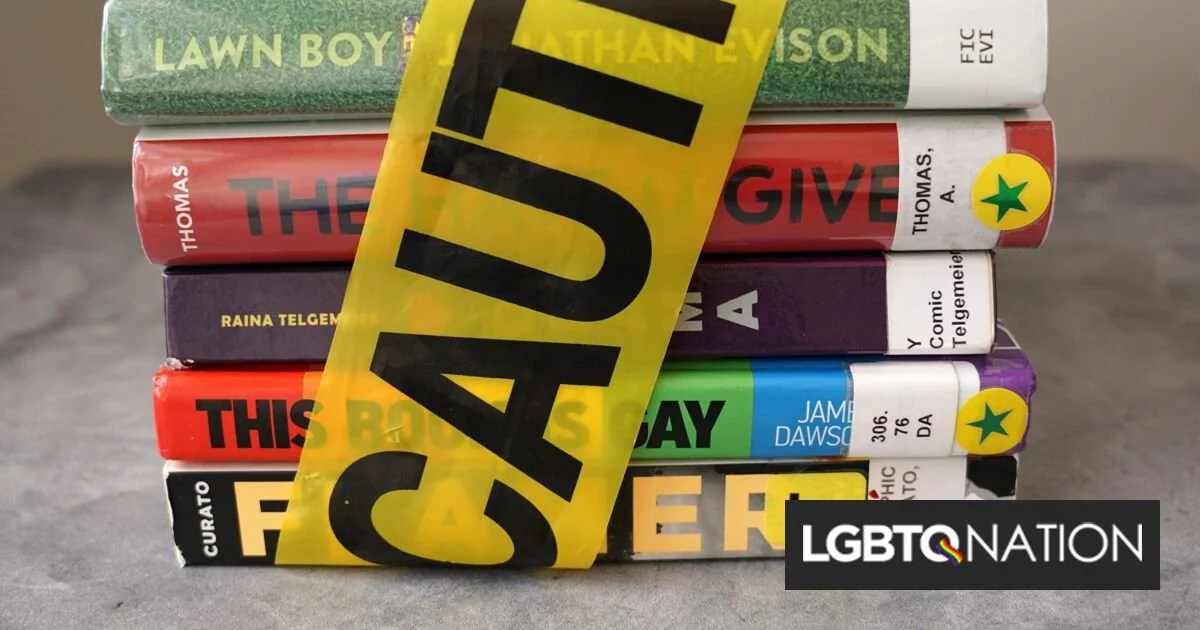
The wave of book bans sweeping across the United States has sent shockwaves through the literary world, with particularly insidious targets being books that represent the experiences of marginalized communities. In recent years, the U.S. has seen an unprecedented number of books being removed from libraries and banned in schools. These books often explore the intersection of race, sexuality, and identity and are being disproportionately targeted due to their representation of marginalized communities. While this has affected many genres and topics, one of the most concerning areas of focus is the banning of books that represent Black gay experiences and narratives. The systematic removal of these books from libraries, schools, and bookstores is not only an attack on intellectual freedom but also an attempt to erase and silence voices that have been historically marginalized. In this blog, we’ll delve into the issue of banning Black gay books, shedding light on why these books are being targeted and the impact of these bans on individuals and communities. We’ll also explore the intersectionality of this issue, addressing how it disproportionately affects marginalized communities, and discuss potential solutions to protect these important books and the voices they represent.
The banning of Black gay texts uniquely impacts the Black gay community in ways that are both direct and insidious. It perpetuates a message that the lives and stories of Black gay individuals are not only unworthy of being shared but are harmful to the moral fabric of society. Banning these texts is a direct attack on the Black gay community, one that implies that their lives and experiences are not valid or acceptable. Authors like James Baldwin and Audre Lorde, as well as more recent writers like George M. Johnson, have faced censorship challenges for their works that center Black LGBTQ+ experiences. The erasure of these texts from public discourse sends a clear and dangerous message to Black gay individuals, particularly youth, that their identity is something that should be hidden or is inherently controversial. This not only affects the mental health and well-being of Black gay individuals but also hinders the progress of society in terms of acceptance and understanding of the LGBTQ+ community. Black gay youth, in particular, face significant negative impacts when Black gay texts are banned. For many young people in the LGBTQ+ community, literature can be a crucial lifeline to understanding their identity and finding a community that accepts and affirms them. The presence of books that feature positive and relatable portrayals of LGBTQ+ people has been shown to decrease suicide rates and improve mental health outcomes among this population. Banning these books only serves to take away important tools for self-affirmation, increasing feelings of isolation and marginalization among Black gay youth who may not have other supportive resources in their lives. When Black gay texts are banned, not only is a message sent to Black gay youth that their lives and identities are something that should be hidden or are inherently controversial, but they are also deprived of important resources that can be crucial to their mental and emotional well-being. The banning of Black gay texts also impacts the wider Black community and society at large. It prevents important discussions about sexuality, gender identity, and the experiences of Black LGBTQ+ people from happening within the Black community. This not only limits the understanding and acceptance of the LGBTQ+ community but also deprives the Black community of important stories and experiences. The erasure of Black gay texts also affects intergenerational communication within the Black community. Many of the banned books, such as those by Baldwin and Lorde, document important aspects of civil rights history and the AIDS crisis, as well as ongoing struggles for LGBTQ+ rights that are an important part of the American historical narrative. Their absence not only censors the present but also erases the past.
In the ever-evolving landscape of book bans, Black gay books find themselves navigating a precarious crossroad between racial discrimination and sexual orientation bias. This intersectionality places them in a unique position of vulnerability, often experiencing a form of double jeopardy in the realm of censorship. On one hand, books with LGBTQ+ themes are frequently targeted for their perceived ‘sexual explicitness.’ On the other, works authored by Black writers are often singled out for promoting ‘divisiveness’ or being accused of containing ‘critical race theory.’ However, when a book is both Black and gay, it encounters a heightened level of scrutiny and opposition, becoming a battleground for issues of race, sexuality, and censorship. The issue of book bans is a complex tapestry woven with the threads of historical and ongoing discrimination. Black LGBTQ+ literature, in particular, faces an uphill battle against erasure. The historical context of book censorship reveals a pattern of silencing voices that challenge the status quo. This is especially true for authors and narratives that sit at the intersection of multiple marginalized identities. The banning of books by Black gay authors is not just an attack on their sexuality or racial identity but an attempt to suppress a nuanced understanding of human experience. It is a form of cultural and intellectual violence that seeks to deny the rich tapestry of human diversity. To address this issue, society must confront the intersectional discrimination at play and work towards a more inclusive understanding of literature and censorship.
As detailed by Nicole Acevedo for The Advocate, “the current targeting of books about Black gay and queer life follows conservative parent-activist groups, religious-right groups, and right-wing politicians stepping up their efforts to ban books they consider inappropriate for schools and libraries.” It is also important to note how racist and violent these discourses become, as is always the case when the reality of Black gay life is mischaracterized. “A passage about sexual consent and assault is highlighted, or an entire book is riddled with quotes pulled out of context, and books addressing the ways Black people can navigate the world as queer people are referred to as ‘pornographic.’” Parents and community groups across the nation have gone to court to demand the banning of books such as George M. Johnson’s memoir All Boys Aren’t Blue, in which the author discusses his experiences growing up Black and gay and learning about sex and sexuality. In some states and school districts, conservative groups have obtained court orders to keep Black gay literature off school and library shelves. James Baldwin’s Giovanni’s Room is another example of a novel that, although written many decades ago, is also targeted in this current moment for being ‘inappropriate’ for schools and libraries. Advocates and defenders of these books note that the backlash is often about these works telling true stories about Black gay people and life, and that it is often the case that the First Amendment rights of access to information and equal protection for all people are not being extended in this instance. As Escafré-Dublet and Goff (2023) write in the introduction to their special issue, “Concerned Parents”—the moniker given to this movement—and their well-organized campaigns “suggest not so much a backlash against books that contain ‘sexually explicit’ material but a backlash against young gay and lesbian writers and their (usually Black) protagonists” (p. 9). Further, “explicit sexual material about White, heterosexual, cisgender youth and adults is not the subject of public protests, let alone book bans, while books such as Fun Home by Alison Bechdel are rarely listed as ‘pornographic’ or banned despite graphic content.” These campaigns also bring to the surface (again) questions of whose knowledge and culture are seen as essential, whose stories are reflected, and what the concept of ‘age-appropriateness’ means, when it is selectively deployed and can be variably interpreted. Attorneys and civil rights organizations are going to court to protect these books, citing their role in helping young people access the information that they need, and the First Amendment right to have access to diverse information. For example, writing for NBCNews.com, Kristina Sgobba reports on “the fight over LGBTQ+ books in U.S. schools.” As she notes, the hearings and arguments have come down to the First Amendment right to access information. Schools that have accepted this argument have allowed these books to remain on the shelves. Many other families across the U.S. have gone to court, on the other side, to demand that schools remove these books from libraries. The outcome of these court battles could significantly impact public school libraries and the diversity of books they will be able to provide to students across the country.
The ongoing campaign of targeted bans and censorship directed at Black gay literature calls into question the principles of free expression and the inconsistent application of First Amendment rights in the United States. While all Americans are theoretically protected equally by the Constitution, the practice of book banning in the United States is anything but equal: some voices are systematically more restricted and scrutinized than others, particularly those at the intersection of multiple marginalized identities. This censorship can take on many forms: formal censorship in the form of official challenges, school board decisions, or legislative actions like Florida’s ‘Don’t Say Gay’ bill and other measures banning or restricting discussion of LGBTQ+ content in schools and libraries, and informal censorship in the form of self-censorship from libraries that preemptively remove a book they anticipate will be challenged, publishers that are increasingly reluctant to take on certain manuscripts, and authors that alter their work to avoid backlash. Both formal and informal censorship have been disproportionately directed at Black gay literature. The language of these bans and challenges often centers ‘parental rights’ and ‘community standards,’ but the majority is always the community, and these terms have historically been a proxy for majority preference rather than minority experience. This leads to inevitable questions: who gets to decide what’s acceptable in public discourse and which stories are protected? American Library Association (ALA) principles state that “libraries should provide materials and information presenting all points of view” and that “users should have access to these materials without restriction based on the origin, background, or views of those who created them” yet Black gay literature has been subject to an exceptional and exceptional degree of resistance to inclusion in libraries. The intersection of Black and queer literature in American culture is also an intersection of two long and painful histories of censored speech: Black Americans have long been systematically denied full literacy and agency in their expression by American culture, from antebellum laws that prohibited the teaching of enslaved people to read, to Reconstruction era sharecroppers who risked being expelled from a plantation if found with a book in their possession, to Black Power era purges of librarians and educators with “Negro sympathies,” to modern attempts to ban curriculum that focuses on systemic racism or Critical Race Theory. LGBTQ+ expression has long been censored and vilified. These histories are not separate in Black gay literature: instead, the censorship of Black gay literature is not an aberration from the values of free expression and American culture, but a direct continuation of them.
Schools and libraries are often at the heart of the book ban debate. Many educators believe that diverse books and inclusive curricula are fundamental to a fair education system, helping all students understand different perspectives and feel seen. Representation in school libraries can be particularly affirming for Black LGBTQ+ students, who often face a lack of visibility in other areas of their lives, and can influence their academic performance, school connectedness, and overall mental health. Educators who work to maintain access to Black gay books have taken a variety of approaches. Some have established independent reading initiatives or “underground libraries” to share banned or challenged texts, while others have integrated diverse authors and perspectives throughout their curriculum rather than singling them out for specialized study or library displays. Increasingly, teacher education programs are preparing future educators to advocate for intellectual freedom and respond to challenges in their communities. School administrators and boards are often left to navigate these challenges, balancing community concerns with the rights and needs of their students. Best practices include having transparent book selection and review processes, basing decisions on educational value rather than personal beliefs or biases, and enacting policies that respect parental input without allowing a veto over materials for the entire student body. Numerous studies have shown that access to diverse books supports students’ development of critical thinking, empathy, and understanding. Librarians have a unique role as both advocates for intellectual freedom and experts in equitable access to information. Organizations like the American Library Association offer resources and legal support to librarians who face challenges, and librarians themselves are often the first line of defense in their communities to maintain access to Black gay books and other diverse literature.
The book banning trend is concerning and has the potential to significantly impact Black gay literature. However, it is also possible for Black gay literature to continue to thrive despite the current climate. Writers and creators of Black gay literature are finding ways to bypass traditional publishing routes and self-publish their work, or find independent or smaller publishers that may be less susceptible to external pressures. Additionally, there is potential for increased interest in Black gay literature as a result of the controversy surrounding book banning. When a book is challenged or banned, it can often lead to increased publicity and sales as people rally to support free expression and access to diverse ideas. In response to the book banning, there has been a mobilization of online communities and organizations to support Black gay literature and challenge censorship efforts. Many organizations are working to promote and protect Black gay literature, such as Lambda Literary, the Black AIDS Institute, and a number of grassroots and community-based groups. These organizations are using their platforms to raise awareness about the importance of diverse representation in literature and to advocate for the rights of authors and readers to access and share all types of books. Publishers and literary communities are also playing a role in supporting Black gay literature in the current climate. Some publishers have explicitly committed to not censoring their authors or their work, and many smaller or independent presses that specialize in diverse voices and stories have continued to publish and promote Black gay literature. There are also a number of publishing houses and imprints that focus specifically on LGBTQ+ and Black literature, such as RedBone, Sibling Rivalry, Akashic Books, Mariner Books, Dutton, and Viking. These publishers have a vested interest in the success of Black gay literature and are likely to continue publishing and promoting these books regardless of the book banning trend. In terms of future trends for Black gay literature, it is likely that new and diverse voices will continue to emerge and find success, despite any attempts at censorship or suppression. Authors like Robert Jones Jr., Bryan Washington, and Danez Smith are just a few examples of Black LGBTQ+ writers who are producing critically acclaimed and widely read work that centers Black gay experiences and narratives. Their success, along with the work of many other Black gay authors, demonstrates that there is a demand for diverse stories and perspectives, and that these voices will continue to find audiences and readership. While book banning and censorship efforts may create challenges and barriers for Black gay literature, it is likely that the resilience and creativity of authors and readers will ultimately prevail.
Oppression and Censorship Toward Black Gay Literature: The History and Future of Book Bans Targeting Black Gay Books During our Cultural War, book bans are currently widespread and increasing within our nation’s public school systems. When examining the school systems’ lists of book bans, it is noted that many books targeted for censorship are about the Black LGBTQ+ community, more specifically, Black gay books. This occurrence poses a major issue within our society since this removal of knowledge and freedom of speech causes actual and present harm within the Black gay community. Overall, the banning of Black gay books from public institutions points to the intersection of both racism and homophobia, and brings questions to our attention of what will happen with our country’s history and cultural institutions moving forward. Moving forward, Black gay books have been persistently enduring and surviving the wave of recent book bans targeting its genre. Black gay literature and the recognition of its importance still take place in various parts of the US within the Black gay community and beyond. Many educators, librarians, and scholars, as well as supporters of the Black gay community are continuing to make efforts to keep these banned books open and accessible for individuals to have access to them. Therefore, in the long run, fighting for these banned books are still taking place and to preserve them is not only important for the Black gay community, but for the entire country to ensure the accessibility and expansion of our knowledge and historical context.
29 responses to “The Impact of Book Bans on Black Gay Literature”
https://shorturl.fm/Lub4O
https://shorturl.fm/zx6uU
https://shorturl.fm/zaIK6
https://shorturl.fm/BPBoB
https://shorturl.fm/sVQ1y
https://shorturl.fm/Y4LvP
https://shorturl.fm/jKII3
https://shorturl.fm/I7a07
https://shorturl.fm/ZqJTj
https://shorturl.fm/R20VU
https://shorturl.fm/EGFli
https://shorturl.fm/0Oa4V
https://shorturl.fm/cvwR6
https://shorturl.fm/fAIxr
https://shorturl.fm/zCoTL
https://shorturl.fm/Q4XUj
https://shorturl.fm/TuQKz
https://shorturl.fm/MfGvK
https://shorturl.fm/IzA9f
https://shorturl.fm/qHUCG
https://shorturl.fm/hVfTY
https://shorturl.fm/6vomi
https://shorturl.fm/Cly8U
https://shorturl.fm/PDjWS
https://shorturl.fm/hm5db
https://shorturl.fm/i0NWw
https://shorturl.fm/zXYbX
https://shorturl.fm/sujp2
https://shorturl.fm/9EaEN