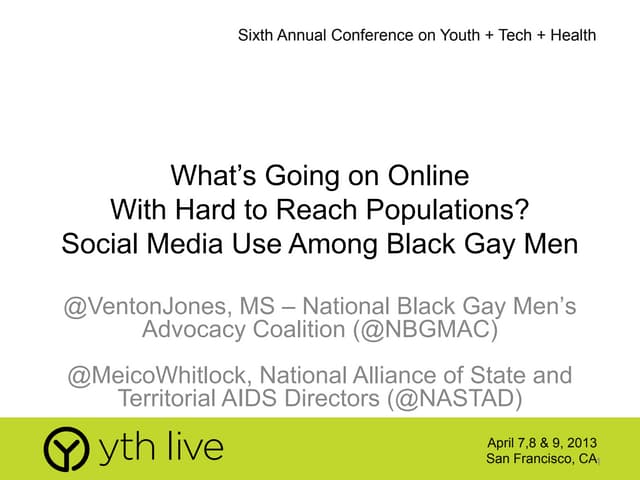
This blog is in response to Literary Conversations: #BlackGayLitWhy. I felt that representation of Black gay literature in social media is lacking. It is quite interesting that books can be uncovered, exposed and flogged in many different digital places. How do we write about books in a way that increases the awareness of readers, yet, it seems that Black gay literature is lacking in many of these social media spaces. So why is there a lack of representation in social media, why are Black gay books not being more visible and accounted for in these spaces? It is probably many different reasons as to why and how and who and when. I would like to find ways to make these essential books more known and more talked about and more recognized as important in both Black Literature as well as Queer Literature conversations.
Social media has disrupted the traditional literary ecosystem, introducing new avenues for books to be discovered, promoted, and appreciated. While it has provided more opportunities for Black gay literature to gain visibility, there remain several nuanced challenges specific to the genre. The digital landscape has undoubtedly facilitated direct connections between authors and readers, bypassing traditional gatekeepers and allowing for more organic promotion of diverse voices. Social media platforms such as Instagram, Twitter, and TikTok have given rise to numerous book clubs and communities like Noname Book Club, which has focused on elevating Black literature and, by extension, queer Black literature. Platforms like #BlackBookTok and #QueerBlackReads also offer curated spaces for book recommendations within specific communities. Nonetheless, despite these platforms’ potential for inclusivity, the discovery and visibility of Black gay literature face several challenges. Algorithms that dominate social media platforms tend to favor content with high initial engagement, perpetuating a cycle where underrepresented voices struggle to break through. When Black gay literature does receive attention, it often occurs within insular communities rather than permeating mainstream literary discourse. While books such as those by James Baldwin or more recent authors like Darnell Moore may find their audience within niche communities, they are less likely to experience the viral moments that drive other literary works to cultural prominence. Social media’s metrics-driven nature also poses a challenge to Black gay literature, as the genre often tackles nuanced themes and complex experiences that don’t translate easily into quick, shareable content. The multidimensional facets of the Black queer experience may require more context and engagement than the rapid-consumption model of social media allows, potentially limiting their reach and amplification.
Several overlapping challenges exist that impact the visibility of Black gay books on social media. Algorithmic bias is one. Research has shown that social media algorithms can perpetuate dominant cultural narratives, which may not serve all communities equally. For Black gay literature, this means an uphill struggle against algorithms that may not “understand” the relevance or importance of these books. Content moderation practices are another factor. LGBTQ+ content can be flagged or limited on certain platforms, like Instagram or TikTok, even when it’s completely suitable for general audiences. Books and content related to Black gay themes may be particularly affected by these limitations, which constrains their visibility. Studies have found that Black people who write about queer themes experience higher rates of content limitations and restrictions compared to white people who write on similar themes. The existing biases in the publishing industry are also reflected in social media visibility. If Black gay authors are less likely to get publishing deals, marketing budgets, or promotional support, their work will always begin at a disadvantage in the social media sphere. This becomes a self-perpetuating cycle: lower visibility leads to lower sales, which in turn justifies, to publishers, their reluctance to back these voices. Anti-racism and anti-LGBTQ+ sentiment in some online spaces can also create a chilling effect. Black gay authors and their allies who promote these books may face harassment, which deters consistent advocacy and engagement from potential allies who do not want to experience the same.
This dual marginalization also intersects with the concept of intersectionality in literature. Works that center Black gay experiences inherently occupy an intersection of both racial and sexual marginalization. They often have to carve out space not only in broader literary conversations but also within more specialized or community-based literary discussions. This can sometimes lead to these works falling through the cracks or being underrepresented in both mainstream and marginalized literary spaces. On social media platforms, one can observe this in the way that certain hashtags or communities may be heavily focused on Black literature but not consistently include queer narratives, or vice versa. LGBTQ+ literary spaces are often centered around white authors and books. An example would be books like How We Fight For Our Lives by Saeed Jones or Real Life by Brandon Taylor. These are well-regarded books with critical acclaim that should, in theory, be well-represented on Bookstagram and BookTok, but their presence and visibility within these communities fluctuates. There’s also the issue of building audiences for Black gay literature, which can be more complex due to the intersectional nature of the experience being represented. Readers who don’t share both identity markers may find these works unfamiliar and may require additional context or framing to understand and appreciate them, which can be a challenge on social media where content is often more abbreviated. At the same time, there is a unique opportunity in this space for building particularly strong reader connections when these books do reach their intended audience. The specificity of these communities allows for the creation of very targeted communities around books that center Black gay experiences. I have seen on Twitter where specific digital book clubs have formed around the specific subject matter of Black queer literature, and they have been integral in providing discovery and meaningful conversation for those books.
There are still ways to increase the visibility of Black gay literature in social media. Community building is perhaps the most potent method of all. Establishing hashtags, reading challenges, and book clubs specifically for Black LGBTQ+ literature, and supporting those that exist, will begin to concentrate the attention of audiences and increase the long-term viability of these communities. For instance, the #BlackQueerBookClub has been able to create pockets of visibility for certain works within specific circles. Partnering with influencers who already have significant followings can also increase the reach of Black gay literature. If a popular bookstagrammer or BookTok creator curates content that intentionally includes Black gay literature, they may be able to access audiences who wouldn’t otherwise be reached. Publishers can make these connections easier by creating influencer marketing plans targeted at specific audiences. Content creation that breaks down complex themes into shareable social media content is another way to make Black gay literature more digestible in digital spaces. Creating short videos breaking down books, eye-catching quote graphics, and aesthetically pleasing character relationship maps are all examples of ways that content creators make Black gay literature more accessible in social media. For example, some authors, such as George M. Johnson, have used TikTok as a means of contextualizing and explaining their work in short-form video to make it more accessible to new audiences. Collaborative amplification events are another strategy for reaching past algorithmic barriers. By having many different creators all push a single work at the same time, a sense of momentum and relevancy can be created. Algorithms are programmed to recognize and give more weight to work that is being widely talked about in a short amount of time. This sort of action is what drives the #BlackOutLiteraryFestival, which is an annual event that manages to bring massive, albeit temporary, visibility to works of Black literature. Intentional cross-community promotion is also key to increasing the reach of Black gay literature. By deliberately connecting works that meet the needs of multiple audience types, it can break out of some of the invisibility created by being at the intersection of multiple identities. Black literary circles and LGBTQ+ literary circles, in particular, can help bring visibility to these books by being cognizant and inclusive of the works that might span both.
On social media, conversations dissecting and appraising the representation of Black gay characters have grown commonplace. Platforms like Twitter, with its threads and hashtag discussions, or Tumblr and BookTok on TikTok, are dissecting, critiquing, and celebrating the representation of Black gay characters in real-time. Readers are now more vocal in calling out stereotypical or unidimensional characters and applauding nuanced, multifaceted characterizations. The public discourse on these platforms can shape publishing trends and author approaches, with both more inclined to support Black gay characters that feature diverse and complex identities, as well as a diversity of storylines. In addition, reader-generated content and discussions on TikTok, Instagram, and other platforms are helping to drive visibility and interest in books with multidimensional Black gay characters. When a reader shares content on social media that they resonate with a particular character’s development, relationships, or journey, they not only help to promote that individual book but also signal to the wider market that there is a demand for such portrayals. Fan communities forming around characters from Black gay literature also signal to publishers and authors a demand for this representation. Fans create fan art, theories, and deep dives that can keep a book in conversation long after its release. This ongoing engagement shows a vested interest in characters that resonate, making it more likely for publishers to take a chance on similar books. The dialogue that characters like the ones from Akwaeke Emezi’s books spark on social media also points to how these characters can have a cultural life and impact beyond the books themselves. Authors can also engage directly with readers on social media about character issues, providing insights into what resonates with audiences and what does not. This feedback loop can be an invaluable tool for authors as they develop their characters, making them more relatable and true to life. Many Black gay authors are active in these conversations, building a community around their work and creating a collaborative dynamic that ultimately enriches and diversifies representation.
Cultural perceptions about Black and LGBTQ+ communities can influence how Black gay literature is approached, or avoided, in social media contexts. Stereotypes and preconceptions about these communities can create narrow expectations about what Black gay-themed literature should or should not cover, impacting how such works are framed, discussed, and promoted in social media spaces. The long histories of hypersexualization of Black and gay identities have also influenced how Black gay literature is discussed or promoted on social media. On one hand, any book covering romance, desire, or sexuality from a Black gay perspective can become, wrongly, oversexualized in certain social media discussions, whereas similar themes in other literary works or from authors of other communities are not treated the same way. On the other hand, books that are not in line with expectations, such as Black gay literature that is not about trauma, anger, or that covers joy, everyday life, or belongs to genres like science fiction, can also be ignored because they don’t align with what people culturally believe these books should be covering. In addition, certain religious and conservative cultural influences can affect how Black gay literature is received within some Black online spaces. Cultural and religious tensions can create less enthusiasm for the promotion or discussion of these works in certain communities, thus affecting their visibility. The complicated relationship between some religious communities and the acceptance of LGBTQ+ individuals can also have an impact on Black gay literature that may touch on these themes, especially those books that directly address the intersection of Black religious experience and gay identity. Cultural perceptions about what is considered “valuable” or “literary” also play a role. Literature that addresses the intersection of race, sexuality, and other identity aspects is often pigeonholed as “issue-driven” or “niche”, when, in fact, these books are important for their art and story. This perception, consciously or not, influences how they are received and talked about on social media, with a tendency to focus solely on the social and educational value of the work rather than its literary elements. Cultural perceptions are also changing, however, and the increased cultural focus on authentic representation and diverse narratives has led to new opportunities for Black gay literature. Cultural changes and growing conversations around the value of different perspectives have led to more people being open to reading, learning about, and promoting these books in social media contexts.
The underrepresentation of Black gay literature on social media is a complex issue, reflecting systemic challenges at the intersections of race, sexuality, publishing practices, and digital platforms. While social media has democratized many aspects of literary conversation, it has also, in some ways, mirrored or even exacerbated existing disparities in representation. Algorithmic biases, community segregation, and cultural barriers all play a role in the limited visibility of Black gay literature on these platforms. But there is also cause for optimism. The very tools that contribute to the problem also offer immense potential for community building, direct author-reader engagement, and collaborative amplification efforts. As individuals and communities become more aware of these gaps in representation, strategic interventions can lead to meaningful increases in visibility for these important voices. Increasing the representation of Black gay literature in social media spaces isn’t just about selling more books or promoting individual authors—it’s about ensuring that the full richness of the human experience is reflected in our cultural conversations. These literary works provide vital perspectives that can enrich our understanding, our empathy, and our collective imagination. Addressing the structural and cultural barriers that limit their visibility is a step toward a more inclusive, representative, and ultimately rewarding literary landscape for all readers.
15 responses to “The Lack of Black Gay Literature Representation in Social Media”
https://shorturl.fm/GDXtC
https://shorturl.fm/vtcQx
https://shorturl.fm/t2qjt
https://shorturl.fm/ZMWGE
https://shorturl.fm/C9nvo
https://shorturl.fm/tBlr5
https://shorturl.fm/LevWI
https://shorturl.fm/eqVca
https://shorturl.fm/KcbiS
https://shorturl.fm/Nz1v4
https://shorturl.fm/KdR1o
https://shorturl.fm/hW1T2
https://shorturl.fm/SQOmt
https://shorturl.fm/jO3Sn
https://shorturl.fm/teRCO