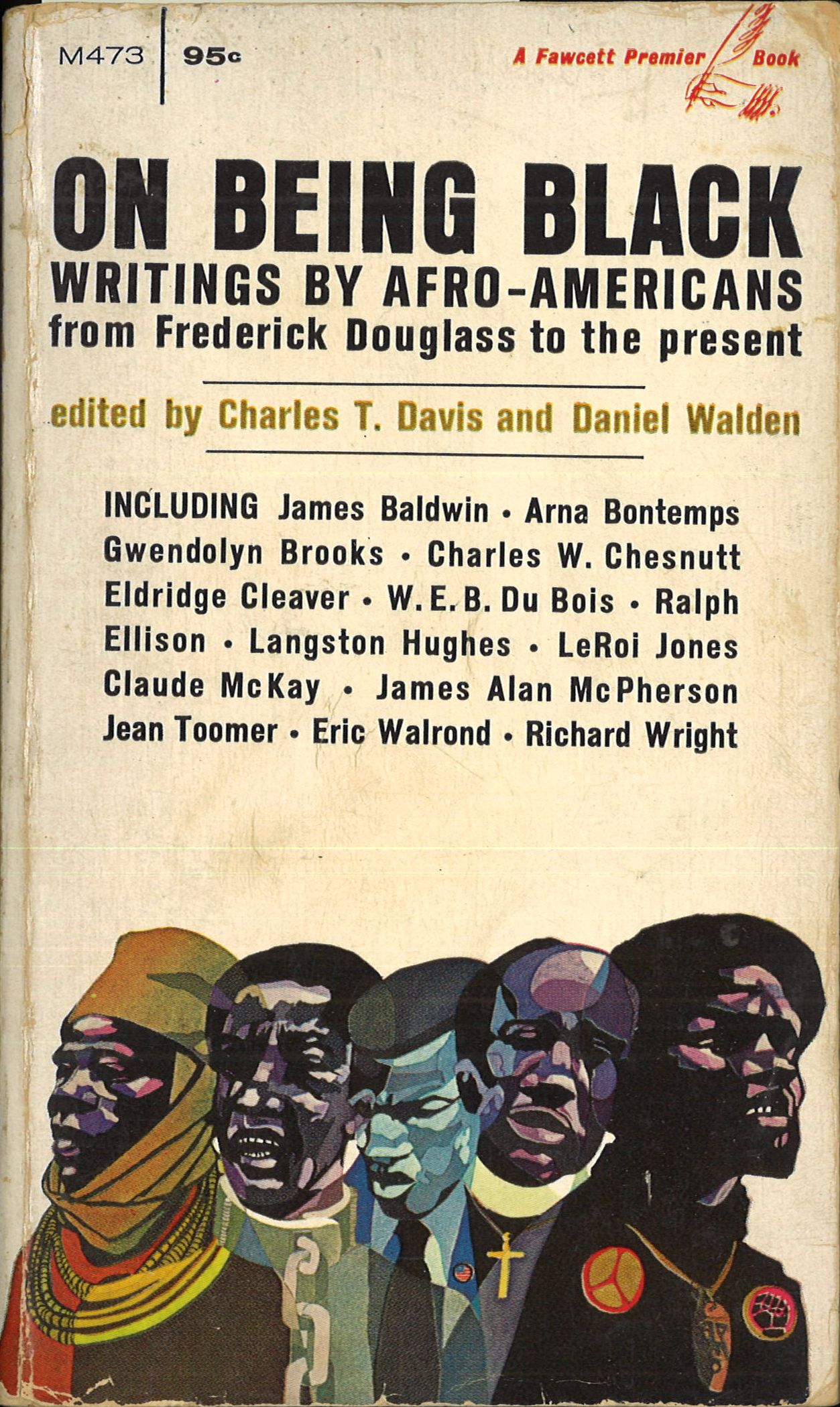
Over time, the Black gay experience has been ignored, excluded, and silenced through many different means. What this largely entails, is an intentional or unintentional erasure of the voices of Black gay people in literary discourse and tradition. The causes of such exclusion of such an intersection of identity in literary canons are many; from a lack of Black LGBTQ+ authors and poets in recorded history, to an ongoing historical oppression against Black gay people and continued publishing and reviewing roadblocks in the industry, intentional efforts to erase Black gay writers, coloniality, homophobia within Black culture, and many other possibilities. As history has demonstrated, the problems that have led to such an exclusionary literature are systematic and complex, with roots in racism, imperialism, and other historical power imbalances that have determined whose voices were valuable enough to be published, catalogued, and preserved. This blog delves into the different reasons for such a lack of literary representation, a major problem that has a longstanding history, while also acknowledging the resilience of Black gay writers and the recent work done to promote literature that amplifies Black gay voices.
The underrepresentation of Black gay authors and their works in literature has long historical antecedents in the power structures of what has been traditionally valued or deemed acceptable in literary circles. The gatekeeping roles that have defined ‘good’ literature have, from the inception of the publishing industry, elevated the narratives that affirmed the status quo, rather than those that questioned the dominant social paradigms. For Black gay authors, this gatekeeping has meant grappling with dual, sometimes triple, layers of marginalization. The Harlem Renaissance, a period that saw a proliferation of Black cultural and literary output, is a case in point. Authors such as Countee Cullen, Alain Locke, and Richard Bruce Nugent produced works that included queer themes; however, these elements were often downplayed, made more obscure in code, or even excised prior to publication. The 1926 publication of Nugent’s ‘Smoke, Lilies and Jade’, a rare contemporary unambiguous and explicit expression of male same-sex desire, was radical because it was an anomaly. The anthology Fire!!, which included Nugent’s story, was quickly decried and effectively quashed after publication. Throughout the 20th century, Black gay authors were often forced into either making their work more palatable to the publishers of the day (who would accept the works at the cost of muting their message), or staying true to their voice and remaining unpublished. Historians and literary scholars have examined the ways in which manuscripts and books that included Black gay themes were often outright rejected by publishers, heavily edited to remove any ‘objectionable’ material, or only published in runs too small to attract wide attention. Gay content in published works by Black authors was typically ignored or omitted in reviews or by scholars, further perpetuating a cycle of erasure. Classification and cataloging practices in libraries have often miscategorized these works, hindering their discoverability. The cumulative effect of this systemic erasure is a literary history that presents Black gay writing as if it were a more recent development when, in fact, it is a deeply rooted tradition that has been suppressed or overlooked.
Black gay writers still face significant challenges in today’s publishing industry. The major publishing houses are still primarily white, heteronormative institutions with executives who may lack cultural competency or confidence in the marketability of Black queer literature. According to a 2020 New York Times study, around 95% of books published in the last five decades were by white authors and a smaller percentage of those books featured LGBTQ+ content. This amounts to Black gay authors receiving comments that their work is ‘too niche’ or ‘not marketable’ for current readerships – assumptions based on who the publishing executives believe is buying books rather than existing sales data. Even when they are able to secure publishing deals, Black gay authors often report struggling against expectations for their work’s content and marketing. Many have been pressured to focus on trauma or make their work more ‘accessible’ to white, straight audiences by reducing the number of cultural references or altering specific experiences that do not feature in white gay narratives. This is partly because of an overreliance in the industry on ‘comparable titles’ when evaluating manuscripts which makes it difficult for Black gay writers to pitch or receive support for their work. As Black gay narratives have been historically suppressed, there is a loop of underrepresentation in which the lack of prior successful Black gay titles is used as a reason to reject new Black gay literature. The advances and marketing budgets given to Black gay authors also remain significantly lower on average than what is offered to white and/or straight authors and writers. The tokenization of Black gay authors in publishing houses can often lead to a mindset in which one successful Black gay narrative is enough to represent the community and its diversity. As a result, the full breadth of Black queer experiences are limited in their exposure to readers. Alternative and small press publishers have often been the outlets that have taken on work that the major houses rejected and have given Black gay authors a place to publish. In the past, companies like Redbone Press, founded by Lisa C. Moore in 1997, have been instrumental in publishing work by Black gay authors that was otherwise not considered by major houses. However, they face their own set of distribution and financial issues that are challenging to the growth and reach of their work.
In mainstream literature, gay narratives have often been conflated with white, middle-class male experiences, excluding the narratives of color and diversity within the LGBTQ+ community. Simultaneously, within Black literature, heteronormativity has often prevailed, with some elements of Black culture and movements stigmatizing homosexuality as a ‘white disease’ or as an attack on Black masculinity and community cohesion. The concept of intersectionality, coined by legal scholar Kimberlé Crenshaw, offers a framework for understanding how racism and homophobia intersect and compound one another in the lives of Black gay individuals. It emphasizes that the experiences of these individuals cannot be understood by simply adding up the separate effects of racism and homophobia. Instead, their experiences of discrimination are shaped by the ways in which these two systems of oppression intersect and interact. Crenshaw’s framework highlights the need for a more nuanced understanding of how multiple forms of discrimination overlap and impact individuals and communities. The intersection of racism and homophobia can lead to unique forms of discrimination and marginalization that are not experienced by individuals who only face one of these oppressions. In the case of Black gay individuals, this means that their experiences are often invisible in both mainstream LGBTQ+ literature and Black literary canons. The absence of Black gay narratives has significant real-world consequences. The erasure of these narratives perpetuates the harmful notion that Black gay individuals do not exist or cannot exist, depriving Black LGBTQ+ individuals of literary mirrors that reflect their experiences. The visibility and success of works like James Baldwin’s ‘Giovanni’s Room’ (1956), which explored themes of both race and sexual identity, is notable precisely because such intersectional narratives were rare. Baldwin himself struggled with the pressure to choose between his identities, with his publisher initially rejecting Giovanni’s Room for fear of alienating his Black audience. Despite advances in diversity and inclusion, many contemporary literary spaces still prioritize single-axis analysis, with reading lists, literary prizes, and courses often categorized under ‘Black literature’ or ‘LGBTQ+ literature,’ rarely acknowledging works that sit at the intersection of both.
Effects of colonialism and imperialism on black gay literature include more than censorship. European imperialism often introduced strict gender binaries and expectations of heteronormativity to countries where local cultures might have different ideas about gender or sexual relations. Academic literature has found historical examples of same-sex relations and gender nonconformity among the ‘yan daudu in Northern Nigeria, among the Efik in Southern Nigeria, and in other parts of Southern Africa, and colonial rulers often criminalized these behaviors. Post-colonial states often retain anti-sodomy laws from colonial times. Missionary work during the colonial period introduced Western concepts of heterosexuality as a norm, and as a moral imperative, which homophobia now defends from “Western influence” rather than revealing itself to be a product of Western culture. The effects on black gay writing today are two-fold. On the one hand, the colonial history in non-Western nations means that contemporary black gay authors are often faced with issues of authenticity, or being “unpatriotic” in their writing. This happens even though homophobia itself is in a sense a defense against Western cultural influence. On the other hand, the works of black gay authors from Africa or the Caribbean are still subject to being exoticized, especially when they are published, by publishers and readers. The black gay author from these regions is often asked to contextualize the story as a “coming out” narrative, or to mark the queerness as more progressive than a putatively homophobic “traditional” culture, either of which reinforce problematic neo-colonial attitudes that erase or are ignorant of the history of diverse sexualities in black culture. Further, the continued existence of a Western publishing industry and its large reach makes it more difficult for black gay writers to reach audiences unless they write in a way that is “accessible” to Western audiences, or if they self-translate from their original language. For example, African and Caribbean languages and cultures may have culturally specific words or ideas for gender and sexual expression that are not available in their colonial language or would be lost in translation.
The societal stigmatization of homosexuality is an additional reason why Black gay literature is not more prevalent. The societal stigmatization of homosexuality has contributed to the censorship of Black gay literature in two ways. In some Black communities, homophobia has been a component of church doctrine, notions of masculinity, and political organizing around racial solidarity. The Black church has played an ambivalent role in many African Americans’ lives. It has been a site of resistance from racism and heteronormativity, yet it has also been the place of popular reinforcement of homophobia and stigmatization of same-sex sexuality and relationships. A young Black gay man who wants to write stories reflecting his experience might instead self-censor or not write at all because he is afraid of community ostracism. In the 1960s and 1970s, Black Arts movement had a nationalist component that devalued homosexuality as antirevolutionary or a result of white cultural influence. For instance, poet and political activist Amiri Baraka was an outspoken homophobe. This stigmatization of Black homosexuality established a false binary between racial liberation and sexual liberation, and established Black gay artists and writers as outside of Black cultural movements. Black gay authors have had to fight against the charge that being open about their sexuality is a form of racial betrayal. Some Black readers have been embarrassed to read Black gay literature out in the open for fear of being misread as gay. Some libraries in Black neighborhoods have been challenged by their patrons for having Black gay literature on the shelves. Some of these books are written by Black gay authors but some are not. The cultural stigmatization of homosexuality has also impacted Black gay writers. For example, some have said that they have either self-censored themselves or have written about heterosexual characters to be more ‘marketable.’ E. Lynn Harris, the best-selling Black gay author, initially self-published his books after many publishers turned away from his work. His success with books like Invisible Life, published in 1991, proved that Black gay literature could be profitable.
The push to center Black gay stories as an important part of literary culture is therefore not simply a project or an advocacy issue related to identity politics; it is part of a project that benefits the literary world as a whole. The representation of a diversity of experiences is important because it is the only way for people to be exposed to an understanding of what the human experience is. It is important to challenge the simplistic notions of what makes a story “universal” or “relevant.” Over the last 30 years there have been important developments in this area, even if the results have not been commensurate with what is needed. Books by James Earl Hardy, Darieck Scott, G. Winston James and Janet Mock, to name just a few, take nothing away from either the racial or sexual aspects of their characters. Other contemporary writers, such as Bryan Washington, Robert Jones Jr., and Rivers Solomon are creating stories that move past the one-dimensional to show the complexity of Black gay experiences. This group of writers is also able to build on both new modes of distribution that have resulted from the internet and digital publication options that allow authors to get their stories out without necessarily having to rely on traditional publishing as well as a foundation established by earlier Black gay writers and the work they did to gain space and acceptance. Organizations that focus on and support Black LGBTQ+ writers have also helped open the door for new Black gay writers to enter the field. For example, Fire & Ink, a national advocacy and membership organization for LGBTQ writers of African descent established in 2002, has given Black gay writers a community, as well as mentorship and publication opportunities. Lambda Literary’s Writers Retreat for Emerging LGBTQ Voices has also served as a space that has developed several Black gay writers who have gone on to make important contributions to the field. The cultural significance of Black gay literature is not just felt by Black and/or queer readers, either. One of the main values of increased representation is that it creates more room for readers to imagine different ways of being. Literature that resists simplified versions of both Blackness and queerness allows for a richer and more complex experience. Research has shown that one of the positive side effects of reading works with diverse perspectives and themes is that it has a positive effect on readers who may not identify with those same themes in terms of empathy and prejudice. In particular, schools have a responsibility to expose their students to Black gay literature and a number of school systems are starting to include these works on their syllabi. The increased prominence of Black gay literature has also contributed to the development of both language and form in literature as Black gay writers have sought to find new ways to express their perspectives and to communicate experiences that have often been suppressed or otherwise hidden. Danez Smith’s use of fragmented narrative in poetry or Rivers Solomon’s use of different genres, such as science fiction and fantasy in their writing are just two examples of ways in which marginalized writers often produce formal innovation.
The underrepresentation of Black gay narratives in literature is not an organic void, but the product of a long and complex history of marginalization, exclusion, and cultural denial. From colonial legacies of heteronormativity to modern-day publishing gatekeeping, from the erasure of intersectional identities to stigma and discrimination in cultural contexts, there are many forces that have contributed to the silencing of Black gay voices in literature. Despite this history of repression, however, there is a wealth of Black gay literature that has been created, often through alternative publishing channels or subverting the expectations of dominant narratives. There are many Black gay authors whose work is celebrated for its artistic merit, cultural impact, or both, and many more whose stories are waiting to be discovered or rediscovered. The importance of Black gay literature lies not only in its ability to reflect the experiences of those who share those identities, but also to open up new perspectives and enrich the literary landscape with stories that are often underrepresented or misunderstood. As the literary world continues to grapple with issues of diversity and inclusion, it becomes increasingly important to recognize the value of Black gay narratives and to amplify the voices of Black gay authors. This means not only calling for more representation, but also actively seeking out and supporting the work of Black gay writers, as well as critically examining the structures that have led to their marginalization in the first place. By understanding the roots of the underrepresentation of Black gay literature, we can move beyond simply calling for “diversity” or “variety” in our reading and begin to address the deeper power dynamics that shape what gets published and what remains hidden. The recovery and celebration of Black gay literature is not only a matter of inclusion, but of reclaiming a history that has been intentionally distorted and misrepresented. Publishers, educators, librarians, and readers all have a role to play in dismantling the systems that have marginalized Black gay voices and in creating a more equitable and inclusive literary landscape. The future of literature depends on our ability to confront the past honestly and to make space for the full diversity of human experience in our bookshelves and our literary canon.