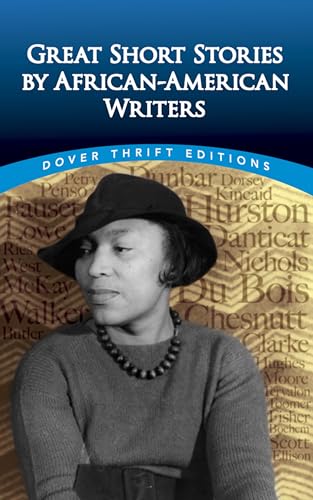
The past decades have seen a shift in the literary landscape with a slow, but growing, expansion in the voices that tell their stories. There are many people that have historically been either silenced or not given the opportunity to speak. We can look at black gay writers who have their own unique and powerful intersection of racial identity and sexual identity. As these two parts of identity intersect, a person with these identities will experience life through a lens that will be different than someone who is white or gay or both, but not black. When a black gay writer pens a short story, there are many layers that come into play: the culture they were raised in, the culture their family was raised in, the stereotypes they may or may not identify with, the history they know, and the reality they experience every day. In this blog, we will dive into the details of how to write a short story from this specific intersection. We will see how black and queer can affect and change the way one chooses to tell their story, what their characters are like, the themes they may focus on, and how these stories add to the tapestry of today’s literature.
In terms of theory, the idea of intersectionality was coined by legal scholar Kimberlé Crenshaw, but for Black gay writers it is less of an academic exercise and more of a lived experience that fundamentally impacts and infuses their work. When telling stories, particularly short stories, Black gay writers have to reckon with multiple, interlocking systems of racism and homophobia, and create narratives that authentically represent the challenges and the beauty of navigating this intersection. Authors like James Baldwin, whose work ‘Giovanni’s Room’ pioneered a kind of queerness that was also fundamentally racialized, show that this intersection of identities also gives rise to its own unique opportunities for storytelling. Contemporary authors like Saeed Jones in ‘How We Fight for Our Lives’ follow in this tradition of Black gay writing, using the short narrative vignettes of the work to show the various ways in which race and sexuality both intersect to form a person’s experience. In their short fiction, Black gay writers will often depict the various ways that their characters move through spaces that may accept one part of their identity while rejecting the other—whether that’s the predominantly white gay spaces where they might encounter racism, or the Black spaces where they might encounter homophobia. In this way, the intersection of these identities not only shapes the narrative journey but also opens up new possibilities for tension, revelation, and character growth within their stories. Intersectionality also allows Black gay writers to challenge essentialized ideas of both Blackness and queerness, complicating and humanizing these identities and providing a broader understanding of what it means to be both Black and gay.
Writing as a black gay author, it’s impossible for identity not to influence your art, but how and to what extent is a very personal decision. There are many successful black gay authors who have chosen to fictionalize their own experiences or directly incorporate them into their work. For others, this is not how they express themselves. There are no wrong answers here, either is a valid and effective means of creative expression. For me, the various ways identity has played a part in my own life informs many decisions when it comes to telling stories. The highs and lows of family acceptance, finding community, facing discrimination, loss, triumph, joy, celebration, etc. all provide rich, colorful material for short fiction. The ability to bend language through the rhythms of Black queer linguistics, or to have a culturally specific touchstone for a particular interaction or scene, or how those within the black and queer community interact with one another also provides unique opportunity to create short stories with original voices and perspective that might not have existed without black and/or queer specific knowledge. A challenge to black gay authors, like many artists, is also the expectation of how they should, or should not, use their voices. There are always people within marginalized communities who expect writers to produce “representational” literature for and about all black people or all gay people. Others want a very specific type of political statement to be made. The most effective black gay authors are the ones who can rise above expectation and use their own vision as the foundation of their art. My own identity as a black gay man can be a powerful tool for creative inspiration when it comes to the telling of stories. My own vantage point on power, the way it is structured, microaggressions, code-switching, resilience, etc. can be used to not only make powerful short fiction that transcends cultural specificity, but to make short fiction with such cultural specificity that it has universal appeal. Invisibility and vulnerability, privacy and truth are also powerful tension points that inform many of the narrative choices I make as a writer in ways that a straight, white writer may never have to think about.
Black gay writers often have a unique relationship to community in their short fiction: readers can expect to see their communities not only depicted, but expanded in ways that both complicate and subvert the assumptions of a wider public sphere. This is especially true when the gay community (or parts of it) have not been previously represented in mainstream writing, or have been written about in stereotypical ways. In particular, short stories have been a vehicle for writers to illustrate the specificity of Black gay communities: in the language they use, the reference points they share, the spaces they frequent, and the histories they remember. In this regard, Black gay writers are often at the forefront of not only showing the unique importance of chosen family in Black queer communities, as seen in the work of writers like Darnell Moore, but also at showing the historical precedents of Black queerness that have not been acknowledged by dominant society, as in the work of writers like Robert Jones Jr. Black gay writers, in my experience, also tend to resist the impulse to show the parts of their community that they think might be ‘most respectable’ to dominant audiences, which often results in ignoring or downplaying internal conflicts, class and colorism, and a wide range of relationships to femininity/masculinity that exist within all communities. This, I think, is what makes their fiction better, but also serves as a kind of refusal of the burden of positive representation that tends to fall on marginalized writers. It is also notable that short fiction is a useful form for examining community since the length of the form allows the author to hone in on brief moments that capture certain dynamics of Black queer community: these can include instances of community building, instances of conflict within community, or simple moments of recognition in Black queer space. There is a sense of intimacy to the short story form, and to the communities that Black gay writers depict which are often (as communities of gay people have historically tended to do) formed in resistance to not being a part of the wider mainstream community.
Black gay writers, by virtue of their intersectional identity, bring inherently subversive perspectives to the craft of short fiction. Characters defined not only by race but also by sexual orientation and often other facets of identity like gender or class, disrupt narrative conventions that have traditionally favored white, heteronormative experiences. Consider how a black gay writer might reshape the coming-of-age story—a genre familiar and cherished in literature but one whose typical trajectory presumes a heteronormative path and often overlooks racial and sexual identity as factors that significantly alter the experience of growing up. Authors such as Jamel Brinkley in ‘A Lucky Man’ show how the immigrant story is just as much a matter of perspective as it is of literal movement. Such writers take stock of narrative tropes and elements—the classic stories of love, family, community, adversity—and reimagine them, experimenting with themes, settings, and character dynamics that traditional, mainstream literature has often ignored or handled superficially. The romance becomes political when two black gay men fall in love and are met with societal hostility. Family narratives unravel to expose the nuances of acceptance and rejection, of performing identity to fit familial molds. Genre tales—fantasy, science fiction, horror—are revitalized by the infusion of black gay experiences and concerns. Formal techniques in storytelling also reflect this reshaping. Non-linear timelines might reflect the disjointed experience of living on the margins. Code-switching in dialogue can highlight the dexterity required to navigate various social spaces as a black gay individual. Utilizing multiple perspectives can dismantle the myth of a monolithic black gay community. By blending new and old forms, these writers expand the canon in ways that subvert and enrich it, creating a literature that is not only more inclusive but more innovative and representative of the myriad human experiences.
The representation of authentic characters is central to good short fiction, and Black gay writers have important perspectives to contribute on this topic, especially when writing characters from their own communities. Authenticity is less about a specific checklist of characteristics that make a Black gay character, as that would simply be a kind of inauthenticity that replaced old stereotypes with new ones. Instead, authenticity can be thought of as coming from a deep understanding of how members of shared cultural and identity groups can and do have richly varied experiences while also being shaped by their commonalities. This can be as simple as the way that specific communities and characters are formed by their geography, economics, class, education, cultural history, and more, as is seen in the characters of Bryan Washington’s Lot , while still being distinctly themselves with individual personalities and desires. Black gay writers are uniquely adept at creating characters for whom their identities shape but do not define their humanity. These characters will often experience racism and homophobia and also fall in love, have goals, have friends, be happy, have bad days, and be just like any other human. The more experience a writer has with the details of what life is like for certain kinds of characters, the more specific they can be with how those characters move through the world. This can mean knowing what dialect or language a particular character will speak in different settings, how those characters might be the targets of microaggressions or other violence in their everyday life, what pop culture references will be meaningful to them, and more. This level of specificity can help to give characters a lived-in quality that makes them more relatable to readers and adds a richness to the world of the story. As short fiction provides fewer words in which to do character work, writing authentically about such characters can be a challenge as well as an opportunity. A writer who has experience with a community will be able to say more with fewer words, drawing on shorthand, nuances, and details that quickly build up a character for the reader. Black gay writers will also often use cultural shorthand and references specific to certain subcommunities in ways that add economy of language while also increasing the specificity and thus relatability of a character. At other times, Black gay writers might play against stereotypes of both Blackness and queerness by creating characters that are decidedly different from common perceptions and tropes, in ways that can surprise and teach readers. Through such authentic characterizations, Black gay writers expand the world of literature and the possibilities for who we see represented in it while also showing how specificity of experience can lead to more relatable, universal fiction.
The short story form, particularly compressed forms like flash fiction or microfiction, provides a unique set of tools for interrogating the complexities of identity. Novels provide an expansive format for following characters through their development over time. Short stories can preserve frozen moments of time and characters in a state of challenge or reinforcement. Black gay writers wield this concentrated power to capture particularly important moments in characters’ lives where specific aspects of their identities come into conflict or relief. In Black gay short stories from Brandon Taylor or others, a family dinner, a passing interaction, a moment overheard might be used to illuminate crucial ways in which identity structures experience. The form’s economy requires choices about which facets of identity will be made most salient in a given story. A Black gay writer might create a story where race takes center stage in a conflict, one where sexuality is most significant, and one where class, education, or place of origin (to name just a few other examples) have the most weight—all while still understanding and suggesting how those facets of identity intersect with one another. This approach both combats reductive expectations that marginalized writers should only or always center their marginalization and offers a wide range of Black gay writers a way to center joy, desire, ambition, or simply quotidian experiences through the lens of their particular cultures. The shortness of the form also allows for exciting experimentation with identity. A flash story might zoom in on a moment of connection between strangers who share unspoken aspects of identity. A series of interlinked short stories might follow a character across different identity-driven challenges over time. The possibilities of short fiction allow Black gay writers to not shy away from the contradictions and complexities of human identity.
This leaves open, of course, the most individual and specific question: how might a Black gay writer bring a distinct approach to the art of the short story? As Black gay writers think about what to write, whom they’re writing for, and how to do so, they have to negotiate assumptions and expectations about representation and misrepresentation, about speaking authentically or not, about responsibilities to community or to aesthetics. In short stories, just as in life, they are doing the work of a fiction that enlarges our idea of fiction and our idea of life. It is work that unsettles the easy and dominant idea of universality and models how writing can be more and different than that. No one way of writing the short story will come to predominate, though specific intersections will make different claims for how it can be done. At this intersection, Black gay readers and writers have found homes in short stories, and in some cases, we continue to make our homes by inventing new stories.
69 responses to “Crafting Identity: Writing A Short Story as a Black Gay Writer”
Join our affiliate family and watch your profits soar—sign up today! https://shorturl.fm/X33uf
Maximize your income with our high-converting offers—join as an affiliate! https://shorturl.fm/obfWd
Share our products, earn up to 40% per sale—apply today! https://shorturl.fm/xf9q1
Join our affiliate program today and earn generous commissions! https://shorturl.fm/oDz4h
Refer friends and colleagues—get paid for every signup! https://shorturl.fm/xfSmc
Promote, refer, earn—join our affiliate program now! https://shorturl.fm/ejdaK
Partner with us for high-paying affiliate deals—join now! https://shorturl.fm/Db80m
Maximize your earnings with top-tier offers—apply now! https://shorturl.fm/D5pZt
Get started instantly—earn on every referral you make! https://shorturl.fm/p3yZp
Promote our products and earn real money—apply today! https://shorturl.fm/DsdFi
Your influence, your income—join our affiliate network today! https://shorturl.fm/CIU9A
Boost your income effortlessly—join our affiliate network now! https://shorturl.fm/iNEE7
Become our affiliate—tap into unlimited earning potential! https://shorturl.fm/FihCc
Be rewarded for every click—join our affiliate program today! https://shorturl.fm/kBQI3
Boost your income—enroll in our affiliate program today! https://shorturl.fm/zdHFo
Start sharing, start earning—become our affiliate today! https://shorturl.fm/ghbuH
Start profiting from your network—sign up today! https://shorturl.fm/QjWyh
Turn your network into income—apply to our affiliate program! https://shorturl.fm/rRjoE
Share our products, earn up to 40% per sale—apply today! https://shorturl.fm/DWLkD
Start sharing our link and start earning today! https://shorturl.fm/vIyYY
Be rewarded for every click—join our affiliate program today! https://shorturl.fm/CjmBx
Drive sales and watch your affiliate earnings soar! https://shorturl.fm/95woN
Partner with us and enjoy recurring commission payouts! https://shorturl.fm/tWAfL
Join forces with us and profit from every click! https://shorturl.fm/UPnTs
Be rewarded for every click—join our affiliate program today! https://shorturl.fm/k1Uco
https://shorturl.fm/8VKZh
https://shorturl.fm/PbV1z
https://shorturl.fm/MwLnV
https://shorturl.fm/TF4Kg
https://shorturl.fm/syF06
https://shorturl.fm/F6OuI
https://shorturl.fm/TUc3D
https://shorturl.fm/txFfn
https://shorturl.fm/rx7Oe
https://shorturl.fm/gLRJ0
https://shorturl.fm/MMZQD
https://shorturl.fm/MYqox
https://shorturl.fm/d2C91
https://shorturl.fm/sdKvC
https://shorturl.fm/DQa8b
https://shorturl.fm/MpeH4
https://shorturl.fm/ItxIR
https://shorturl.fm/3NT60
https://shorturl.fm/I2nbg
https://shorturl.fm/x9k71
https://shorturl.fm/KIKGO
https://shorturl.fm/Z11Lv
https://shorturl.fm/XZ1pB
https://shorturl.fm/KPTAA
https://shorturl.fm/F1yUd
https://shorturl.fm/FoMnr
https://shorturl.fm/32vMr
https://shorturl.fm/YZqzw
https://shorturl.fm/AtuF8
https://shorturl.fm/eqcQL
https://shorturl.fm/k2jDY
https://shorturl.fm/CF0H1
https://shorturl.fm/wkQEu
https://shorturl.fm/4mfaI
https://shorturl.fm/L1xbr
https://shorturl.fm/na7if
https://shorturl.fm/kCyxN
https://shorturl.fm/D9tDQ
https://shorturl.fm/jHmYj
https://shorturl.fm/IuExB
https://shorturl.fm/ceUW1
https://shorturl.fm/xpBbN
https://shorturl.fm/VmL7f
https://shorturl.fm/3Nb4c