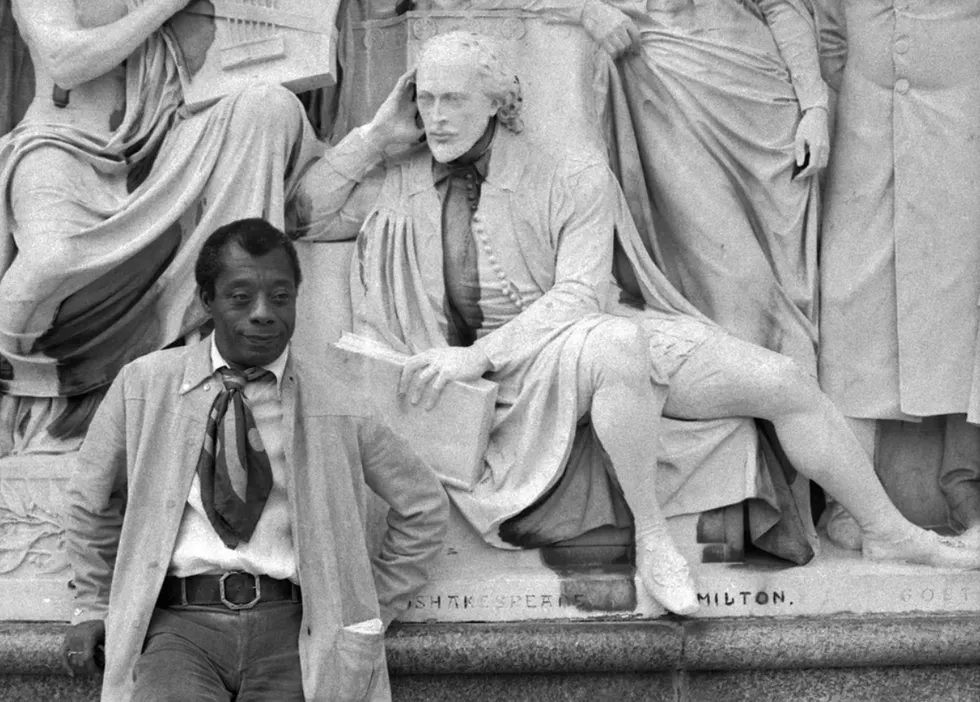
Character Development in Black Gay Literature refers to the ways in which authors of African descent who identify as gay, bisexual, or otherwise queer create and portray characters within their literary works. These characters often embody complex experiences related to race, sexuality, identity, and intersectionality, providing a window into the diverse lives and narratives of Black gay individuals. The development of these characters can vary widely, ranging from nuanced and multidimensional portrayals that challenge stereotypes to more one-dimensional or caricatured depictions. Historically, Black gay characters have been marginalized or absent in mainstream literature, making their representation and development in the works of Black gay authors particularly significant. Authors such as James Baldwin, June Jordan, Audre Lorde, Marlon James, and Brandon Taylor have contributed to the development of complex Black gay characters in their narratives. James Baldwin’s characters in works like “Giovanni’s Room” and “Another Country” explore themes of sexuality, race, and identity with nuance and depth. June Jordan and Audre Lorde’s poetry and prose often feature characters who embody their own experiences as Black lesbian feminists. Contemporary authors like Marlon James and Brandon Taylor continue to expand on these themes, creating multifaceted Black gay characters who navigate various social and personal landscapes.
The development of black gay characters is naturally based around intersectionality. This is an important factor when developing these characters as it allows for a complicated and nuanced discussion of identity. Intersectionality as a concept in the context of black gay characters speaks to how both of these aspects of identity exist alongside each other while intersecting with each other, but not in any hierarchical ways in which one trait is not dependent on the other but constantly complicate each other. An example of this in a novel such as Marlon James’ Black Leopard, Red Wolf is the character of Tracker. Tracker, whose queerness is emphasized, but not the only major part of his characterization, has to navigate both a fantastical world as a black person, and a fantastical world as a queer person. For James’ Giovanni’s Room, even with a white main character, David, in the novel it is still based on Baldwin’s identity as a black gay man. In the development of more recent novels such as Brandon Taylor’s Real Life, the main character Wallace, an aspiring young scientist, must deal with microaggressions at his predominantly white university from both racist and homophobic peers, which has helped him to become adept at code-switching and hyper-aware of his environment.
Family dynamics are another important site of character development in Black gay literature, and they can present both significant challenges and opportunities for resilience. Family is often depicted in these stories as a complex system of relationships in which characters experience both rejection and love, and must navigate these often painful contradictions. In ‘No Ashes in the Fire,’ Darnell Moore describes how his character development was influenced by family members who both protected him from violence in his neighborhood and expressed homophobia at home, creating a complicated emotional landscape that shaped his identity. Family also features prominently in the poetry of Danez Smith, where characters often develop in response to familial acceptance or lack thereof. In many instances, Black gay literature explores the importance of extended family networks and chosen family when biological families are not welcoming. The novels of E. Lynn Harris frequently depict protagonists who form surrogate family structures with other queer individuals, developing nurturing and supportive relationships that allow for authentic self-expression. Moreover, many of these narratives explore the dynamics between Black gay men and maternal figures in particular, such as in Saeed Jones’s memoir ‘How We Fight For Our Lives,’ where his relationship with his mother plays a central role in his character development. Overall, these works highlight the ways in which family acceptance or rejection can profoundly impact identity formation, and characters often develop a range of adaptive strategies to navigate these dynamics, from compartmentalization to radical honesty, reflecting different paths toward integrating their sexual and racial identities within familial contexts.
Themes of resilience are especially prominent in depictions of the coming of age of Black gay characters. Riggs, writing in the form of a documentary, shows a movement from fragmentation to a sense of being whole, rejecting racist and homophobic messages, and forging new words that could speak to their particular situations. The collection edited by Joseph Beam, In the Life, shows character sketches with a range of strategies for resilience, from political action to self-expression, as a mode of selfhood in the face of being erased by the larger culture. Black gay characters might come to realizations through times of crisis when their identities are made more salient to them, as Baldwin’s Arthur in Just Above My Head does, in which his musical career as a singer allows him space to both express himself and to come to new realizations about himself. Growth in such characters is often charted through particular developmental stages, whether it is coming to terms with internalized homophobia, finding community or developing an authentic relationship, or simply the space to be. In contemporary literature like Saeed Jones’s poetry collection Prelude to Bruise, resilience in characters might not be represented as the absence of injury but instead the ability to make their wounds a source of personal agency and creative vision. Identity formation is not presented as one coming out moment but as an ongoing process of becoming, in which characters redefine themselves in response to their changing social worlds, showing how resilience serves as both a way of surviving and a source of creativity to imagine new ways of being.
The duality of triumph and challenge in Black gay character development is a recurring motif in the literature that captures the nuanced reality of these experiences. Characters in these stories often face a combination of external adversities, such as discrimination, violence, and exclusion, as well as internal conflicts, including shame, fragmented identity, and a sense of belonging. The development of Johnnie Ray in Larry Duplechan’s novel ‘Blackbird’ exemplifies this duality, as he encounters both racial prejudice within gay communities and homophobia in his religious Black community. The character’s journey reflects how external challenges can catalyze internal growth and development. In ‘B-Boy Blues’ and its sequels, James Earl Hardy explores characters navigating not only racial and sexual identity but also the complexities of class differences. This intersectionality further enriches the characters’ development, illustrating how multiple social factors intersect and impact personal growth. A variety of literary techniques are employed to convey these challenges, including non-linear storytelling that mirrors the fragmented nature of characters’ experiences, code-switching dialogue that reveals characters’ adaptability in different environments, and stream-of-consciousness passages that provide insight into characters’ internal conflicts. Triumphs in character development, on the other hand, often manifest as moments of self-acceptance, authentic connection, and community building in the face of societal barriers. In the poetry of Essex Hemphill, characters experience triumph not by assimilating but by engaging in radical self-definition and creating their own communities. In more contemporary works, such as Rivers Solomon’s ‘An Unkindness of Ghosts,’ speculative fiction is used to imagine characters whose triumphs involve redefining identity beyond the constraints of the present. The complexity of these narratives resists a simple transition from tragedy to triumph in character development. Instead, characters’ development often takes on a cyclical nature, with victories coexisting with ongoing struggles in ways that more accurately reflect lived experiences than literary conventions.
In the portrayal of Black gay literary characters, societal prejudice often serves as both an antagonist and a catalyst for development. These characters face external forces in the form of racism and homophobia, which often require significant internal change. Writers in this tradition are deliberate in depicting how racism, homophobia, and their intersections impact the psychology and behavior of their characters, which might include the development of hypervigilance, strategic self-concealment, or complex defense mechanisms. For example, in Rasheed Newson’s ‘My Government Means to Kill Me,’ the protagonist Trey’s political awareness and agency are shaped in direct response to the government’s lack of response to the AIDS epidemic. This shows how character resolve can be paradoxically fortified by systemic prejudice. In numerous stories within this tradition, societal prejudice can engender a ‘double consciousness’ (a term borrowed from W.E.B. Du Bois) in which characters must perceive themselves through their own self-image as well as through the distorted lens of the dominant culture. This psychological tension can manifest in characters like Wallace in Brandon Taylor’s ‘Real Life,’ whose scientific detachment is both a professional asset and a defense mechanism against the barrage of microaggressions he experiences. Characters in Black gay literature frequently develop strategies to cope with prejudice, which include code-switching, selective disclosure, or crafting psychological ‘safe spaces’ through fantasy or artistic expression. In works such as Abdi Nazemian’s ‘Like a Love Story,’ characters reframe their relationship with prejudice through activism, often transforming their pain into political energy. These narratives highlight how societal prejudice can precipitate profound developmental challenges for characters while also endowing them with unique strengths—such as heightened empathy, acute observational skills, or creative resilience—that become central to their identities, implying that character development occurs not in spite of societal barriers but through the process of engaging with and overcoming them.
Narratives on character development in Black gay literature frequently incorporate community and cultural influences, with authors detailing how characters navigate and are shaped by the dominant culture, traditional Black spaces, white LGBTQ+ spaces, and Black queer subcultures. Characters may be formed by, resist, or seek belonging within these varied cultural landscapes. In the ‘Invisible Life’ series by E. Lynn Harris, the character of Raymond evolves through experiences in Black fraternity life, corporate America, and the nascent Black gay scene of 1980s New York, each presenting different facets of his identity. Darnell Moore’s memoir ‘No Ashes in the Fire’ reflects on his personal growth through engagement with Black church culture, the academic world, and activist circles, illustrating how each setting affirms and restricts elements of his identity. Cultural production such as music, fashion, and language play crucial roles in character development, with specific reference to ballroom culture, church music, and literary legacies as influences characters draw upon. In Kenji Yoshino’s ‘Covering,’ characters navigate identity formation by both adhering to and resisting cultural norms, depending on their social context. Works like Bryan Washington’s ‘Memorial’ depict characters moving through a range of cultural settings, from Black southern communities to Japanese society, showing how exposure to global cultures can broaden the scope for character development beyond traditional American frameworks of race and sexuality. These examples underscore how character development in Black gay literature is often a negotiation of diverse cultural heritages and communities, with characters often forming hybrid identities that synthesize elements from various traditions to construct authentic selfhoods that challenge established cultural definitions.
Characters are used in literature to illustrate both one- and two-dimensional ideas or concepts. In Black gay literature, the characters are some of the most well-developed literary characters. Characters in this literature provide the readers with what it is like to be gay, black, and sometimes both. In addition, this literature shows that race and sexuality are inextricably linked and form the basis of identity. Black gay characters are complex; they present some of the most well-written portraits of identity and growth. These characters, through family, friends, survival skills, overcoming struggles, facing discrimination, meeting people from other cultures, and so on, present the journey to becoming true to oneself, which is not a journey specific to a particular identity. In fact, the most developed characters are often those that the readers cannot pin down or label based on identity. In some ways, it is not the end of development but the beginning as these characters are able to exist in several worlds at once and discover the joys of being in more than one place at a time. The development of characters in black gay literature continues to become more complex and difficult to pin down. Characters in this literature allow the readers to experience and understand the unique experiences of being black and gay. In some ways, these characters transcend both of those identities and add to the overall development of literature. They also give important visibility to a group that has not always been included in mainstream literature, as well as sometimes being left out of the larger literature of identities. By their very nature, black gay literature challenges the readers’ preconceived ideas about identity and literature and in so doing opens up new possibilities for both. The development of characters in black gay literature, in so many ways, says something about how we all must continually work on becoming fully ourselves even when the social structure around us works to prevent that development.
47 responses to “Developing Characters in Black Gay Literature”
Earn passive income on autopilot—become our affiliate! https://shorturl.fm/nwTsn
Become our affiliate and watch your wallet grow—apply now! https://shorturl.fm/Gd88j
Refer and earn up to 50% commission—join now! https://shorturl.fm/yPoQZ
Turn referrals into revenue—sign up for our affiliate program today! https://shorturl.fm/IKbcP
Promote, refer, earn—join our affiliate program now! https://shorturl.fm/ejdaK
Unlock exclusive rewards with every referral—apply to our affiliate program now! https://shorturl.fm/xMHke
Turn referrals into revenue—sign up for our affiliate program today! https://shorturl.fm/hnoQp
Apply now and receive dedicated support for affiliates! https://shorturl.fm/2gIXA
Join our affiliate family and watch your profits soar—sign up today! https://shorturl.fm/fcWjI
Join our affiliate program today and start earning up to 30% commission—sign up now! https://shorturl.fm/Xtht0
Partner with us and earn recurring commissions—join the affiliate program! https://shorturl.fm/sP7Gm
Monetize your traffic with our affiliate program—sign up now! https://shorturl.fm/p0xL3
Turn your network into income—apply to our affiliate program! https://shorturl.fm/AYhyN
Your influence, your income—join our affiliate network today! https://shorturl.fm/Mo59J
Partner with us for high-paying affiliate deals—join now! https://shorturl.fm/em2On
Become our partner now and start turning referrals into revenue! https://shorturl.fm/DBijO
Monetize your influence—become an affiliate today! https://shorturl.fm/63UVi
Drive sales, earn commissions—apply now! https://shorturl.fm/h2E5B
Promote our products and earn real money—apply today! https://shorturl.fm/ICQol
Share our offers and watch your wallet grow—become an affiliate! https://shorturl.fm/YdsEm
Refer and earn up to 50% commission—join now! https://shorturl.fm/v4IwW
Boost your income—enroll in our affiliate program today! https://shorturl.fm/RdANR
Monetize your audience with our high-converting offers—apply today! https://shorturl.fm/aKClg
Promote our brand, reap the rewards—apply to our affiliate program today! https://shorturl.fm/sVovX
Start earning passive income—become our affiliate partner! https://shorturl.fm/bCnSy
Be rewarded for every click—join our affiliate program today! https://shorturl.fm/8Ag45
Promote our products and earn real money—apply today! https://shorturl.fm/77xNT
https://shorturl.fm/AZHEf
https://shorturl.fm/AUnGj
https://shorturl.fm/j9MXJ
https://shorturl.fm/MqV6G
https://shorturl.fm/sFjKO
https://shorturl.fm/tHQDH
https://shorturl.fm/4cqzB
https://shorturl.fm/mc1qC
https://shorturl.fm/qfc6R
https://shorturl.fm/HAE32
https://shorturl.fm/UpkjM
https://shorturl.fm/tq5Jw
https://shorturl.fm/MMZQD
https://shorturl.fm/UZ14R
https://shorturl.fm/me2Mi
https://shorturl.fm/97eGo
https://shorturl.fm/GYWxE
https://shorturl.fm/vHDsd
https://shorturl.fm/besjJ
https://shorturl.fm/I2nbg